What Jiu-Jitsu Teaches Us About Control (And Why We Don’t Actually Have It)

One of the first things I tell new people when they start Jiu-Jitsu is is that Jiu Jitsu is about control. Before the submissions, before the fancy berimbolos, at it’s core, Jiu-Jitsu is about control.

We want to know how to control our opponent.
How to control the position.
How to control what happens next.

It makes sense. Control feels safe.

If I can control the situation, I can avoid bad outcomes. I can stay ahead. I can protect myself.

But while Jiu-Jitsu is about control, it also has a way of challenging that belief almost immediately.

Because the truth is, you find out pretty quickly that no matter how strong, skilled, or experienced you are…

You are not always in control.


The Illusion of Control on the Mats

Every grappler has had that moment.

You’re in a good position. Maybe even dominant. Side control. Mount. You feel solid. Stable.

And then something shifts.

A small movement. A missed detail. A little too much space or not enough pressure in the right spot.

Next thing you know, you’re the one defending.

That moment is frustrating, especially early on. It feels like you lost control.

But what you’re really learning is something deeper:

Control in Jiu-Jitsu is temporary.

It’s fluid. It’s negotiated. It’s constantly changing.

You don’t hold control forever. You manage it moment by moment.

And sometimes… you lose it.

There’s been many times I’m dominating my training partner and then unexpectedly, I get swept. Maybe my weight was off, maybe I didn’t respect a certain grip on my lapel or maybe everything was good, but their counter was even better.


The Real Skill Is Not Control.. It’s Response

As you keep training, something interesting starts to happen.

You stop chasing perfect control and you stop feeling defeated when it slips away.

You start focusing on what to do when things go wrong.

You learn how to:

  • stay calm when your guard is passed
  • breathe when someone is putting pressure on you
  • frame, move, and recover instead of panicking

Because things will go wrong.

And the more you accept that, the better you get.

Not just at Jiu-Jitsu.

At handling discomfort.

At adapting.

At staying present under pressure.


How This Shows Up Off the Mats

That same need for control shows up everywhere in life.

We try to control:

  • how people respond to us
  • how relationships unfold
  • how our health plays out
  • how our day is supposed to go

And when things don’t go the way we planned, it creates anxiety.

Frustration.

Sometimes even fear.

Because underneath it all is the belief:

If I can just control this, I’ll be okay.

But life works a lot more like a Jiu-Jitsu roll than we realize.

Things shift.

People change.

Unexpected situations happen.

You can be in a “good position” one moment, and feel completely off the next.


Anxiety and the Need for Control

As a mental health counselor, I’ve learned that a lot of anxiety is tied to control (so is a lot of anger).

The mind starts trying to predict, plan, and prevent every possible negative outcome.

“What if this happens?”
“What if something is wrong?”
“What if I’m not okay?”

It’s the mental version of gripping too tight.

And just like in Jiu-Jitsu, the tighter you try to control everything, the more exhausted you become.

The more reactive you become.

The more you feel like you’re losing anyway.


Learning to Let Go (Without Giving Up)

Jiu-Jitsu doesn’t teach you to stop caring.

It teaches you to shift your focus.

Instead of trying to control everything, you learn to:

  • control your breathing
  • control your effort
  • control your decisions in the moment

You stop trying to freeze the roll.

You start flowing with it.

You accept that:

  • you will lose positions
  • you will get put in bad spots
  • you will get tapped

And instead of resisting that reality, you work within it.

That’s where growth happens. That’s when you get better. When you start seeing new moves, opportunities and overcoming challenges.


Maybe That’s the Real Lesson

Control isn’t something you hold onto forever.

It’s something you experience in moments.

And when those moments pass, what matters most is how you respond next.

Jiu-Jitsu teaches us that being okay isn’t about always being in control.

It’s about being able to stay grounded when you’re not.

To breathe when things feel tight.

To think when things feel chaotic.

To trust that even if you’re in a bad position…

You’re not stuck there.

Even if it’s a nasty knee on belly or a heavy side control. At the least, after you’ve exhausted all other possible options, you can always tap, learn from it and try again.

That’s one of the beautiful things about Jiu-Jitsu. It allows us to try and succeed as well as try and fail over and over again in a safe environment.


Final Thought

The longer you train, the more you realize:

The goal isn’t to control everything.

It’s to become someone who can handle anything.

On the mats.

And in life.

That’s a lot to explain to a trial student, but something anyone who sticks with and progresses in Jiu-Jitu will eventually learn.

Why Jiu-Jitsu Is The Closest Things Adults Have to Pay

Somewhere along the way, most adults stop playing.

As kids, play is everywhere. We run, climb, wrestle, invent games, and laugh when things get chaotic. The world feels like something to explore. There is curiosity, movement, and experimentation.

But adulthood slowly replaces play with responsibility.

Work. Bills. Deadlines. Schedules. Stress.

Before we know it, most of our days become structured around productivity. We start measuring time by how useful it is. Anything that doesn’t have a clear purpose can start to feel like a waste.

And then something interesting happens when you step onto a Jiu-Jitsu mat. Once you get over the initial anxiety, let the ego go and allow yourself to relax, something almost magical happens.

Without realizing it, you start playing again.


The Quiet Disappearance of Play

Many adults don’t notice when play disappears from their lives.

It happens gradually.

The pick-up games stop. The spontaneous wrestling with friends fades. The idea of doing something purely for the joy of it becomes less common.

Somewhere along the way we start believing that play is something children do, while adults are supposed to be serious, efficient, and productive.

But our minds and bodies never stopped needing play.

In fact, psychologists have long understood that play is essential for emotional regulation, creativity, and resilience. It allows the brain to experiment, reset, and recover from stress. Don’t even get me started on the need for touch and physical connection that humans need and yet it tends to become less and less common as we get older.

Play isn’t childish.

It’s human.


Jiu-Jitsu Is Structured Play

At first glance, Brazilian Jiu-Jitsu might look like the opposite of play.

Two adults trying to control each other on the ground. Chokes. Joint locks. Sweat. Physical pressure.

But anyone who trains knows something different is happening beneath the surface.

Rolling is essentially a game.

Every round is a puzzle.

You try something. Your partner counters. You adjust. They adapt.

The entire experience becomes a moving conversation between two bodies solving problems in real time.

Sometimes you’re experimenting with a new guard.

Sometimes you’re seeing if an escape works against resistance.

Sometimes you’re just trying something ridiculous to see what happens.

That’s play.


Why the Jiu-Jitsu Feel So Good for the Mind

One of the reasons people fall in love with Jiu-Jitsu is because of what happens mentally during a roll.

For a few minutes, your mind has no choice but to be present.

You aren’t thinking about work.

You aren’t worrying about bills or emails or tomorrow’s responsibilities.

Your entire focus narrows to what’s happening in that moment.

Grip. Frame. Breathe. Move.

It becomes a kind of moving meditation.

From a psychological perspective, this kind of immersive activity creates what researchers call flow, a mental state where attention is fully absorbed in the task at hand. Flow is strongly associated with improved mood, reduced stress, and a deeper sense of satisfaction.

In other words, rolling doesn’t just train your body.

It resets your mind.


The Joy Hidden Inside the Struggle

If you look around a Jiu-Jitsu gym after a hard round, you’ll often see something interesting.

People are smiling.

Even after getting tapped.

Even after being smashed.

You might see two training partners laughing while trying to figure out what just happened in a scramble.

That’s another sign of play.

The struggle itself becomes enjoyable.

You’re learning, experimenting, failing, adjusting, and trying again. It taps into the same instinct we had as kids when we wrestled in the grass or tried to climb something a little too big for us.

The difference is now we’re doing it with a little more awareness.


The Real Gift of Jiu-Jitsu

People start Jiu-Jitsu for many reasons.

Self-defense.
Fitness.
Competition.
Stress relief.

But one of the gifts it quietly gives back is something many adults didn’t realize they lost.

Play.

One of my professors often says in his thick Brazilian accent, “Go play with yourselves”, meaning, go have fun, experiment with moves and don’t take it too serious.

For an hour or two, a few times a week, we get to step away from the seriousness of life and enter a space where curiosity, experimentation, and movement take over.

We get to try things.

We get to fail safely.

We get to learn.

And sometimes, without even noticing it, we get to feel a little bit like kids again.

Rolling around on the floor, solving puzzles, and laughing at the chaos.

Maybe that’s part of why we keep coming back.

Sometimes I Suck, And That’s Part of the Process

There are days where I leave the mat feeling like I’ve unlocked something. Days where I feel like a ninja. My timing feels sharp, my technique flows, and I catch a couple of subs that make me think, “Yeah, I’m getting somewhere.”

And then there are days (more than I like to admit) when I walk out of class shaking my head. Frustrated. Tired. Even embarrassed. Asking myself questions I thought I had stopped asking a long time ago.

Why did I freeze in that position?
Why couldn’t I get out of that side control?
Why did I feel like I forgot everything I’ve learned in the last year?

Some days, I just suck, and last night was one of them. Last night I fought for my life with an energetic, tough 14 year old. I struggled with a young, athletic 20 something and I got absolutely destroyed by a grizzly guy who turns 56 next month.

I left the gym feeling like, yeah, tonight was not my night.
And as much as I hate it in the moment…
I’ve learned that it’s not only normal, it’s necessary.

Progress Doesn’t Look How You Think It Will

When I first started training, I assumed progress would be clean and steady, like leveling up in a video game. You train, you improve. You drill, you retain. You roll, you dominate.

But the mats and Jiu Jitsu don’t care about your expectations.

To take a cue from things I’ve learned in psychology. Progress isn’t always linear and in Jiu Jitsu, progress isn’t only not linear, it spirals. You revisit the same positions over and over. You “learn” something five different times before it sticks. And just when you think you’ve got it figured out, you roll with someone who exposes all the gaps in your game.

It’s humbling. And at times, it’s exhausting.

But the truth is, those days where you feel like you suck?
They’re often the ones pushing you closest to growth.

The Humility Behind the Belt

People see the belt you wear and assume that means you’ve figured something out. And sure, you’ve learned some things, you’ve put in the hours, you’ve been tapped more times than you can count, you’ve survived the awkward white belt phase and kept coming back.

But what they don’t see is the doubt that still lingers.

Even now, as a purple belt, there are days I feel like a beginner. I second-guess my instincts. I get stuck in positions I should be able to escape. I roll with someone newer who catches me slipping, and my ego wants to spiral.

That’s when I have to remind myself: this is part of it.

You don’t grow by always winning. You grow by getting uncomfortable, by testing the limits of your timing, by rolling with people who challenge you mentally and physically. You grow by getting exposed and deciding to come back anyway.

Last night, I got worked. I could’ve blamed it on being exhausted, on the lack of sleep, on just not having it in me to go hard. And yeah, maybe all of that was true. But they’re also just easy outs. The truth is, it wasn’t my night. And instead of running from that or dressing it up with excuses, I’m learning to sit with it. To let it teach me something.

The point is, I showed up and I’ll keep showing up, even when I’m not feeling at my best and even when it’s not my night to be the hammer, but instead the nail.

What the “Suck” Actually Teaches You

Let me tell you what those frustrating days like last night have taught me:

  • They teach me humility. To let go of the image I have of myself and just be a student of the art again.
  • They teach me patience, not just with the art, but with myself.
  • They teach me resilience, to shake off the bad rounds, the bruised ego, and still show up the next day.

Most importantly, they’ve taught me that sucking isn’t failure, it’s a sign that I’m still learning. That I’m pushing my limits. That I’m evolving.

Staying in your comfort zone doesn’t lead to breakthroughs.
Feeling clumsy, out of rhythm, exposed, that’s where the real growth is hiding.

I see it all the time. Students who only want to train when they feel 100%. As soon as they’re tired or slightly off, they avoid rolling, afraid of “losing,” of not looking sharp. Of judgement. But here’s the truth:

There is no losing in training.

I try to encourage them to show up anyway. To train when they’re tired. When they’re not at their best. When they can’t go 100%. That’s when you learn to breathe. To defend. To survive. And honestly? That’s some of the most valuable training you’ll ever do.

Because the outside world doesn’t care if you didn’t sleep well last night.
It doesn’t care if your body aches or your mind is scattered.
Life’s not going to wait for you to feel perfect before it tests you.

You have to learn to show up anyway.
To give what you can.
To stay in the fight, even when it’s not your day.

You’re Not Alone, Even If It Feels Like It

I used to think I was the only one who felt this way. Like everyone else was improving on a straight line and I was the only one who couldn’t get my body or brain to cooperate.

But as I’ve talked to more training partners and coaches over the years, I’ve realized everybody feels this at least sometimes.

Even black belts.
Even competitors.
Even the people who look smooth and confident every round.

They’ve just learned how to ride the wave instead of fighting it.

They know that feeling lost, tired, or off doesn’t mean you’re backsliding. It just means you’re in the middle of the work. It means you’re human.

Final Thoughts

So yeah. Sometimes I suck. Sometimes I wonder “what am I even doing with my life?” LOL.

And honestly? I’ve made peace with that.

Not because I’m okay with mediocrity, but because I’ve finally accepted that mastery looks messy up close. The road to improvement is paved with awkward rolls, ego checks, forgotten techniques, and quiet nights where you wonder if you’re cut out for this.

But I keep showing up.
Not because I always feel great…
But because I know that’s what growth actually looks like.

Some days you feel sharp. Like a ninja even.
Some days you feel like you’ve never trained before.
And both are part of the journey.

So if you’re feeling stuck, if you’re questioning yourself, if you’re sitting in your car after class wondering if you even belong on the mat, take a breath. You’re not alone.

You don’t have to be perfect to be progressing.
You just have to keep going. You have to keep showing up and as they often say, learn to embrace the suck.

Grappling with PTSD: How Jiu Jitsu Can Aid Trauma Recovery

I first wrote this piece for my mental health blog, but it belongs here too. PTSD is something I see in my work and in the lives of many grapplers I’ve met, whether from military service, first responder work, or personal trauma. Jiu Jitsu has a unique way of helping us process and heal, and I wanted to share how the art we love can be a powerful tool in recovery.

If you or someone you know is grappling with trauma, know that you’re not alone and that the mats can be more than just a training ground. They can be a place to rebuild trust, confidence, and connection.

I’d love to hear your thoughts: has Jiu Jitsu played a role in your own healing journey?

Grappling With My Hematoma: When the Fight Goes Beyond the Mat

Sometimes the toughest opponent doesn’t wear a gi. It doesn’t slap and bump. It doesn’t tap out. Sometimes, the fight is with your own body and the only mat is the one you’re forced to stay off of.

The Onset

It started like so many other injuries in this sport do, with something that didn’t seem like a big deal. A little pain, a little swelling. Maybe just the aftereffects of a hard roll. But this time was different. I didn’t pay it much attention and kept rolling until one day after an open mat someone pointed out my ear had swollen up.  

And that’s when I knew: this wasn’t just a bruise. It was something more.

The Diagnosis

When I finally went to get it checked out, I was met with a word I wasn’t expecting: hematoma.
A collection of blood pooling in the muscle tissue. A reminder that the body has its own limits, even when the mind is still chasing the next belt, the next stripe, the next roll.

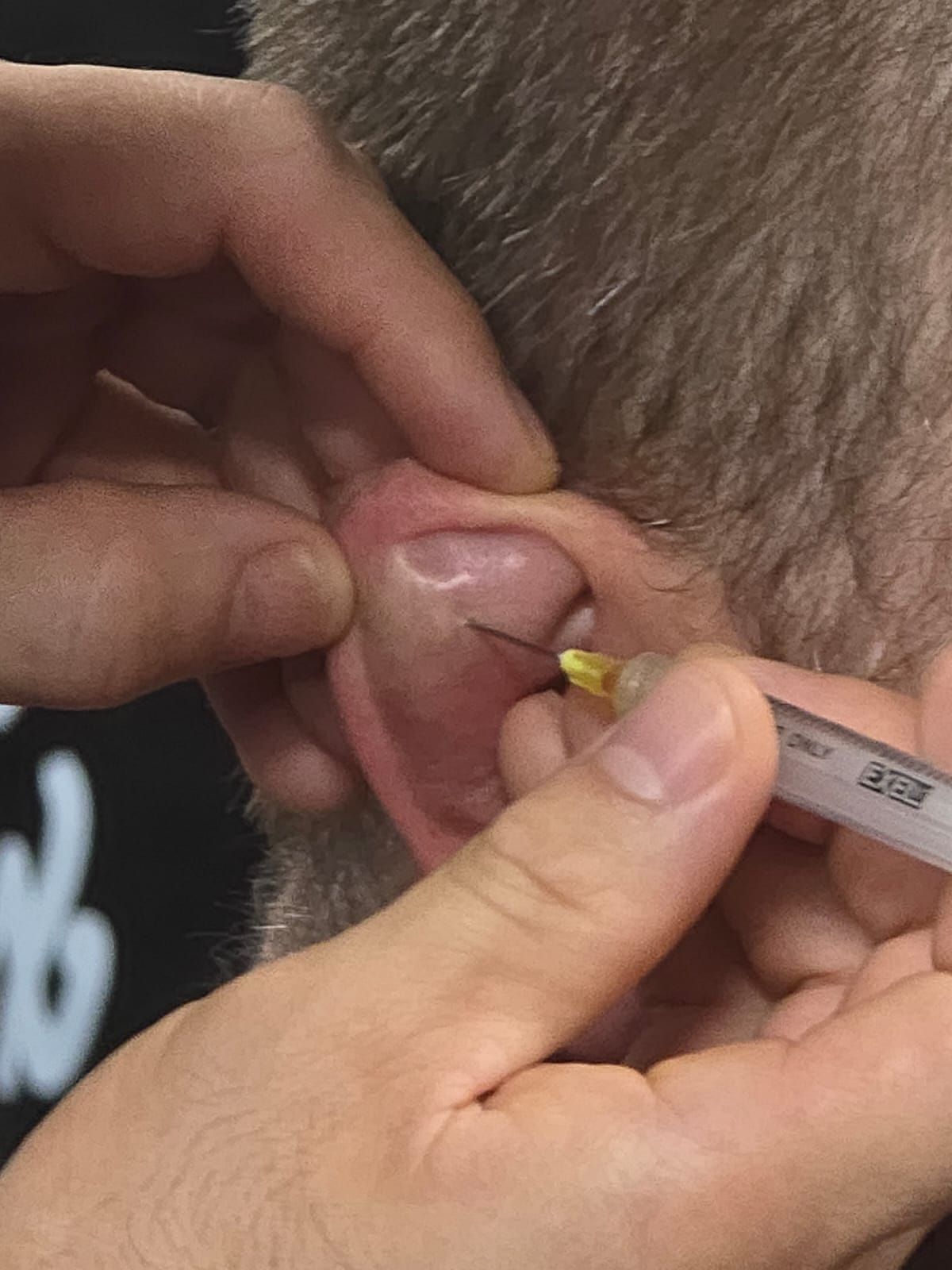
The doctor’s advice? Get it drained. Compressed. Ice. Rest. No training. Elevation. All the usual stuff that sounds simple until you realize what it really means: time away from the thing that keeps you grounded.

Ear hematomas are common in grappling and often lead to cauliflower ear. Some grapplers wear it like a badge of honor and I get that. But I wasn’t ready for the look. Having this happen to me for the first time in over six years of training caught me completely off guard.

The Mental Toll

What caught me off guard wasn’t the physical pain. It was the mental stillness. The way the days felt slower without the rhythm of training. The way the feelings I had used training to quiet came rushing back in. Sadness. Insecurity. Loneliness.


BJJ isn’t just exercise for me. It’s therapy. It’s where I process life, release tension, find clarity.

And without it, the silence crept in.
The doubts.
The restlessness.
The subtle fear that I might lose progress or worse, lose part of myself.

Recovery As a New Kind of Roll

Overtime, I realized recovery is its own kind of training.
You need patience. You need body awareness. You have to let go of ego. You have to listen.
Every time I resisted rest, I prolonged the healing. Every time I honored it, I took a step toward returning.

So I started to treat recovery like a roll: stay calm, breathe, don’t force the position. Adapt to what’s in front of you.

What I’ve Learned

This hematoma taught me that resilience isn’t just about pushing through, it’s also about knowing when to pause.
It taught me that slowing down doesn’t mean stopping.
That healing is a part of training. To trust my body.
And that sometimes, the most important grappling match is the one happening within.

Still Grappling

I’m still healing. Still learning. Still grappling (with headgear until it’s 100%).
But I have a deeper respect for my body, my mind, and the balance between drive and rest.

Because the mat will always be there.

The Calm After the Storm: How Jiu Jitsu Grounds You After a Long Day

No matter how exhausted I am after getting off from work, I can usually find the strength to drag myself to class. There’s something about stepping onto the mat after a long day that feels like an exhale your body has been holding onto for hours.

For many of us, the day begins in chaos, waking up groggy, shuttling kids off to school, facing the noise and demands of work, feeling pulled in a dozen different directions. By the time we get off work, our nervous systems are fried, and our minds are running in loops. That’s where Jiu Jitsu comes in.

When people talk about Brazilian Jiu Jitsu (BJJ), they often highlight its intensity, its competitiveness, and the physical toll it takes. But what doesn’t get talked about enough is the calm that follows the storm, the way training can settle a restless mind and anchor you to the present.

The Reset Button

Walking into the gym is like stepping into a completely different reality. You strip off the titles, the expectations, and the stress. Whether you’re a therapist, a parent, a nurse, or a construction worker, once you tie that belt, you’re just another person on the mat.

The physical exertion of drilling and sparring forces you to be fully present. There’s no room to worry about unpaid bills or unresolved arguments when someone is trying to pass your guard or lock in a choke. Your survival instinct kicks in, but in a safe, controlled environment. This, in itself, is therapy.

You move from fight-or-flight to focus and flow.

Why the Calm Feels So Good

Most of the time I leave Jiu Jitsu feeling so much lighter than I did when I first walked in, and I’m not just talking about the water weight I lost from sweating. It’s one of the main reasons I push myself to go, especially after a particularly hard day.

From a mental health perspective, training BJJ activates several key systems in the body. You get a surge of endorphins, your cortisol levels begin to drop, and you start to regulate your breathing. When you finish class, the same problems might still exist, but your relationship to them has shifted. They’re no longer screaming in your face.

And for those of us who struggle with anxiety, depression, or even burnout from emotionally demanding work, Jiu Jitsu becomes more than a workout. It becomes a lifeline.

Returning to the Body

So much of life keeps us trapped in our heads. We replay conversations, obsess over what we could have said or done differently, and catastrophize about the future. But when you train, you return to the body. You start noticing your breath. You begin to feel the rhythm of movement. You learn to read your training partner’s body language, and in doing so, you become more attuned to your own.

This somatic awareness is healing. Trauma, stress, and emotional pain often live in the body (check out The Body Keeps The Score if you’re really interested in learning more about that) and Jiu Jitsu creates a space for them to move, to be expressed, and eventually, to be released.

The Post-Roll Stillness

There’s a particular kind of stillness that settles in after a hard roll. Your muscles are spent, your gi is soaked, and your heart rate begins to slow. You lie on your back, looking up at the ceiling, breathing deeply. That stillness isn’t just physical, it’s emotional. It’s spiritual.

In that moment, you’re not thinking about tomorrow’s tasks or yesterday’s regrets. You’re just… here. Alive. Present. At peace.

Taking It Off the Mat

The calm after class doesn’t have to stay at the gym. It can bleed into how we parent, how we show up in relationships, and how we manage stress. The more consistent we are with training, the more we begin to carry that grounded presence into everyday life.

Jiu Jitsu won’t fix all your problems. But it can help you meet them from a place of strength, clarity, and emotional balance.

So the next time you’ve had a day that leaves you feeling wrecked and disconnected, step onto the mat. Let the storm of training clear away the debris. And let the calm after remind you of who you are beneath the stress.

You’re more than what happened to you today. You’re a fighter. And fighters know how to find peace in the middle of chaos.

As for morning class people? Well, it definitely takes a special kind of person to wake up and train at 6am 🙂

The Power of Patience: Embracing the Slow Grind in Jiu Jitsu


Jiu Jitsu is often described as a “slow grind “and it teaches us one of the most valuable life lessons: the power of patience. Progress in this martial art is rarely quick or easy. Unlike some sports where immediate results are common, Jiu Jitsu requires long-term dedication, focus, and the ability to keep going even when it feels like you’re not improving.

The journey of learning Jiu Jitsu is a marathon, not a sprint. It’s not about instant gratification; it’s about the consistent, steady effort that leads to growth. Whether you’re rolling with a seasoned upper belt or struggling through a tricky submission, you quickly learn that each step in Jiu Jitsu, no matter how small, is a victory.

Embracing the Slow Grind of Jiu Jitsu

When you first start Jiu Jitsu, it can be overwhelming. The techniques seem complicated, the positions confusing, and the tapping out inevitable and often. You might feel like you’re stuck in a cycle of repeating the same drills without seeing significant improvements. But over time, this repetition is where the magic happens. You begin to notice the subtle shifts in your body’s movements, the increase in your strength and endurance, and the sharpening of your mental focus.

One of the beautiful things about Jiu Jitsu is that it forces you to embrace the process. You can’t rush through learning. The guard sweeps, submissions, and escapes that once seemed impossible eventually become second nature. Not because you pushed harder, but because you allowed yourself the time to truly understand each detail. This kind of progress doesn’t happen overnight, but it’s a profound realization when you realize how far you’ve come after months of patient practice.

There’s one thing I find myself telling new student’s often: “Don’t quit”. I can see the frustration in their face, in their body language and I get it. I was there. Overwhelmed. Exhausted. Confused. Defeated. You feel like it will always be like this, but the truth is, it won’t. Not if you stick with it and be patient.

Why Patience is Key

Patience is the key to unlocking Jiu Jitsu’s full potential. It teaches you that nothing worth having comes instantly. Progress in Jiu Jitsu is measured in small increments. Today, you might master a single detail of a technique, and tomorrow, you may struggle with the same technique again. But through persistence, those incremental victories build up over time, and before you know it, you’re executing complex movements without thinking.

This is where Jiu Jitsu mirrors life. The challenges we face aren’t always going to be solved in a single day or with a quick fix. Whether it’s in your career, relationships, or personal goals, success comes from the ability to show up consistently, day after day, despite not seeing instant results.

The Mental Benefits of Patience in Jiu Jitsu

Jiu Jitsu’s slow grind has profound mental benefits that extend beyond the mat. The ability to embrace the process teaches mental resilience, focus, and self-discipline. It shows you that setbacks are a natural part of growth. When you tap or fail at a technique, it’s not a reflection of your worth, it’s an opportunity to learn, adapt, and try again.

This mindset helps with emotional regulation, especially during stressful situations. Just like in Jiu Jitsu, when life throws challenges your way, practicing patience allows you to approach each obstacle with a clear and steady mind. You begin to see failure not as an end, but as a part of the journey, something to learn from, not something to avoid.

Patience Beyond the Mat: Life Lessons Learned from Jiu Jitsu

One of the most powerful aspects of Jiu Jitsu is how it teaches us patience that applies to all areas of life. Whether you’re facing a tough situation at work, navigating personal struggles, or simply trying to improve your fitness, the lessons learned on the mat: consistency, resilience, and slow, steady effort, are incredibly valuable.

Jiu Jitsu has a way of humbling you. You quickly learn that there’s no shortcut to mastery, and the same is true in life. The more you focus on putting in the work and being patient with yourself, the more you’ll grow, not just as a martial artist, but as a person.

Tips for Embracing the Grind in Jiu Jitsu

  1. Set Small Goals: Focus on mastering one technique or position at a time. Celebrate small victories, and don’t rush the process.
  2. Be Consistent: Show up regularly, even when you feel like you’re not progressing. The consistency will pay off in the long run. You don’t have to kill yourself by training everyday, but pick at least two or three days out of the week and be consistent.
  3. Reflect on Progress: Take time to look back at where you started and appreciate how far you’ve come. Tracking your journey can boost morale during tough times.
  4. Accept Setbacks: Understand that setbacks are normal. Don’t let temporary frustration derail your progress. Embrace each challenge as an opportunity to grow.
  5. Patience with Others: Be patient with your training partners as well. Everyone is on their own journey, and you’ll learn just as much by helping others as you will by focusing on your own growth.

Jiu Jitsu teaches us that patience is not just a passive waiting game, it’s an active part of the learning process. The slow grind is not something to fear but to embrace. The more we practice patience on the mat, the more we unlock the deeper lessons that Jiu Jitsu offers, lessons that go beyond technique and strength, and into the realm of mental and emotional resilience.

As you continue your Jiu Jitsu journey, remember that the slow grind is not a sign of stagnation but part of your growth. Every roll, every drill, and every tap out is a step forward, no matter how small it may seem in the moment. So, take a deep breath, enjoy the process, and trust that with each passing day, you’re getting closer to your goals.


WILL BJJ (BRAZILIAN JIU-JITSU) MAKE ME MORE MENTALLY TOUGH?

The other day I was on a forum where someone asked the question, “Wil BJJ make me more mentally tough?”. Unfortunately, the person who posed this question got a bunch of sarcastic responses but as a licensed mental health counselor and someone who observes various forms of resilience and mental conditioning, I find this topic intriguing. So, does practicing BJJ actually contribute to mental toughness? Let’s explore.

What Do We Mean by Mental Toughness?

First things first. Mental toughness refers to the resilience and strength that help individuals cope with stress, pressure, and challenges. It’s about overcoming fears and inhibitions and performing at your full potential, even when circumstances aren’t ideal. It’s a broad term, encompassing emotional control, self-belief, and the ability to bounce back from setbacks.

The Physical-Mental Connection

In BJJ, physical exertion is a given. The movements are complex, the pace can be fast, and you’re often in physically uncomfortable positions. However, the mental aspect is as engaging, if not more so, than the physical one. It requires a level of concentration, strategic thinking, and problem-solving that is akin to a fast-paced, interactive chess match. This deep mental engagement is often cited by practitioners as a training ground for broader life challenges.

Facing Fears Head-On

Being pinned to the ground or being put in a chokehold can be terrifying experiences. BJJ thrusts you into these uncomfortable situations and forces you to confront your fears directly. The repeated exposure to such stressors can desensitize you to them over time, allowing you to think clearly under pressure—both on the mat and in life.

Emotional Control

A roll (sparring session) in BJJ can be both exhilarating and frustrating. Your emotions can swing from one extreme to the other in a matter of minutes. Learning to maintain your composure in such a volatile environment can be incredibly beneficial. Emotional control doesn’t mean suppressing feelings; rather, it’s about acknowledging them and choosing a rational course of action. This is a key facet of mental toughness and is highly transferable to other areas of life, such as work, relationships, and personal challenges.

Learning from Failure

In BJJ, you will lose—a lot. Even the most skilled amongst us find themselves in compromising positions and get tapped out. What makes BJJ a catalyst for mental toughness is the approach to these losses. There’s a culture of learning from your mistakes, analyzing what went wrong, and coming back stronger. This positive approach to failure fosters resilience, another cornerstone of mental toughness.

Setting and Achieving Goals

BJJ is structured around a ranking system, and each rank has its own set of techniques and competencies that need to be mastered. Setting your sights on the next rank and working diligently to achieve it instills a sense of purpose and promotes self-discipline. The process of setting, working toward, and achieving these micro-goals can be a significant booster for your mental toughness.

Social Support and Community

Lastly, the community aspect of BJJ should not be underestimated. Training together and pushing each other toward improvement creates a sense of belonging and collective resilience. The social interaction and mutual encouragement can be powerful mental health boosters.

Conclusion

While no activity can magically give you mental toughness, BJJ does offer a conducive environment for its development. Through its unique combination of physical challenges, emotional volatility, and strategic complexity, Brazilian Jiu-Jitsu can be a powerful tool for building resilience, enhancing emotional control, and honing your ability to adapt and overcome.

I for one definitely have been able to handle life stressor a lot better since I started training Jiu Jitsu and it’s not just the confidence I feel to defend myself and those I care about, but the confidence to conquer fears and step out of my comfort zone.

So, will BJJ make you more mentally tough? The evidence points to a resounding yes, but like any form of personal development, the results you get are directly proportional to the effort you put into it.

Tackling Competition Anxiety: Finding Calm in the Eye of the Storm

Every time I sign up for a competition, I immediately become anxious. That anxiety only increases the closer I get to competition day and builds up to the point that there have been times I thought I would pass out before I even made it to the competition that day. Thankfully that has never happened.

That’s part of the beauty of competition. Pushing yourself beyond your comfort zone even when every fiber of your being is telling you not to do it. Chances are that the opponent standing across from you is going through the exact same thing.

The fluttering in the stomach, the rapid heartbeat, the sweaty palms – these are familiar sensations for many athletes preparing to compete. For Jiu Jitsu practitioners, the intimate, strategic nature of the sport can amplify these feelings, making competition anxiety a formidable opponent even before stepping on the mat. Recognizing and effectively managing this anxiety is one key for optimal performance.

Understanding Competition Anxiety

At its core, competition anxiety stems from fear – fear of failure, judgment, or even success. It’s the body’s natural response, gearing up to face a perceived threat. However, when unchecked, it can cloud judgment, hamper decision-making, and hinder performance.

A. Physical Symptoms: Increased heart rate, rapid breathing, nausea, and dizziness.
B. Psychological Symptoms: Doubt, hyper-awareness, loss of focus, and intrusive thoughts.

Root Causes of Anxiety in BJJ Competitions

  1. Fear of Public Failure: With spectators watching, not to mention your teammates, coaches, friends and even family members, there’s pressure to succeed, making the fear of public embarrassment a significant stressor.
  2. High Expectations: Whether self-imposed or from peers and coaches, high expectations can be paralyzing.
  3. Mental Stakes: Competitions can feel like a direct reflection of our skills, self-worth, and months of training, amplifying the pressure.
  4. Unpreparedness: A lack of preparation, physically or mentally, can spike anxiety levels.

Strategies for Alleviating Competition Anxiety

A. Embrace the Anxiety

  • Recognize that some level of anxiety is beneficial. It sharpens reflexes and enhances focus. Instead of trying to eliminate it, try harnessing it. Remember, physiologically, there is no difference between anxiety and excitement so keep telling yourself that you’re excited instead of saying your anxious.

B. Visualization Techniques

  • Close your eyes and visualize the entire competition process: arriving at the venue, warming up, stepping onto the mat, executing moves, and ultimately, achieving success.
  • This mental rehearsal not only prepares the mind but also boosts confidence.

C. Deep Breathing & Grounding Techniques

  • Deep, controlled breathing can slow the heart rate and clear the mind.
  • Grounding exercises, like the “5-4-3-2-1” technique (identifying five things you can see, four you can touch, three you can hear, two you can smell, and one you can taste), can help center you in the present moment.

D. Set Realistic Expectations

  • Not every competition will result in a gold medal.
  • Focus on the journey, the lessons learned, and personal growth.

E. Routine & Ritual

  • Establishing a pre-competition routine or ritual can provide a sense of familiarity and control.
  • Whether it’s a specific warm-up sequence, listening to a particular song/playlist, or wearing a lucky charm, these rituals can anchor your mind.

F. Positive Affirmations

  • Replacing negative self-talk with positive affirmations can alter your mindset. Phrases like, “I am prepared,” “I am strong,” or “I’ve got this,” can be powerful motivators.

G. Stay Present

  • Focus on the process, not just the outcome. Instead of fixating on winning, concentrate on each move, each strategy, and the joy of competing.

H. Preparation

  • The more prepared you are, the more in control you feel. This includes physical training, mental rehearsal, and strategy planning.

Post-Competition Reflection

After the competition, no matter the outcome, take time to reflect:

  1. Assess the Anxiety: Was it more manageable? What techniques worked, and what didn’t?
  2. Acknowledge Achievements: Celebrate small victories, even if they’re not related to the competition’s outcome. Perhaps you managed your anxiety better or executed a technique you’ve been working on.
  3. Develop a Plan: Use the experience to refine your approach for future competitions.
  4. Do something to celebrate yourself: It can be something as small as treating yourself to a dessert you’ve been avoiding due to your weight cut or it could be going out with friends. No matter the outcome, reward yourself for doing what most people will never do.

Conclusion

Competition anxiety is a natural part of the athletic experience, but it needn’t be an insurmountable hurdle. So many practitioners let this anxiety keep them from ever competing. With understanding, preparation, and effective coping techniques, you can transform anxiety from a formidable opponent into a powerful ally. As you face future competitions, remember: the greatest battles are often waged within, and mastering your mind is half the victory.

From Addiction to Arm Bars: How Jiu Jitsu Aids in Substance Abuse Recovery

Over the years I have met a handful of Jiu Jisu practitioners who praised the benefits of Jiu Jitsu in aiding in their recovery efforts or curbing bad habits from everything from alcohol to cigarettes and even hard drugs. I for one, know that once I started training Jiu Jitsu regularly, I no longer had the time or desire for some of my old habits which included frequenting bars and drinking beer multiple nights per week. Those habits did not seem to be conducive to me performing well on the mats and the more I fell in love with training, the more I preferred to be on the mats sweating on any given night than in a bar drinking. That’s why it’s no surprise to me that Jiu Jitsu can definitely aid in helping kick a substance addiction.

Addiction is a chronic, relapsing disorder characterized by compulsive substance use despite harmful consequences. Substance use disorder can wreak havoc on an individual’s physical health, mental wellbeing, relationships, and overall quality of life. The road to recovery from addiction can be daunting and fraught with obstacles. However, the discipline of Brazilian Jiu Jitsu (BJJ), with its unique combination of physical, cognitive, and social components, can offer valuable support in this journey.

Understanding Addiction

To understand how Jiu Jitsu can help in addiction recovery, we first need to delve into the nature of addiction. Addiction is much more than a lack of willpower; it is a disease that affects both the brain and behavior. Long-term substance use can lead to changes in the brain’s structure and function, particularly in areas related to reward, stress, decision-making, and memory.

The Jiu Jitsu Way

Jiu Jitsu is not just a martial art; it’s a physical workout, a strategy game, a form of mindfulness, and a social activity, all rolled into one. Here’s how this multifaceted discipline can aid in the recovery process:

1. Reclaiming the Body

Substance abuse often leads to neglect of physical health. The regular physical exertion in Jiu Jitsu not only improves physical fitness but also cultivates a sense of respect for the body. It helps individuals understand their body’s capabilities and limitations, promoting a healthier relationship with their physical selves.

2. Natural Highs

Physical exercise, like that involved in Jiu Jitsu, stimulates the release of endorphins – neurotransmitters that produce feelings of pain relief and euphoria. This natural ‘high’ can serve as a healthy replacement for the artificial and harmful ‘high’ derived from substance use.

3. Mindfulness on the Mats

Jiu Jitsu requires complete mental engagement. Whether it’s a drilling session or a roll, practitioners need to stay present, focused on their movements and their opponents’. This is mindfulness in action, providing a temporary reprieve from cravings or ruminations about substance use.

4. Building Resilience

Recovery from addiction is a journey filled with setbacks and challenges. Resilience, the ability to bounce back from adversity, is therefore a vital skill in this journey. In Jiu Jitsu, every sparring session, every tap, is a lesson in resilience. Each time a practitioner gets back up after a defeat, they’re building their capacity to handle setbacks – a skill that’s invaluable in recovery.

5. A Sense of Achievement

Mastering a new technique, progressing in belt ranks, or just managing to stay on the mat for a minute longer than before – Jiu Jitsu is filled with measurable achievements. These successes can boost self-esteem and self-efficacy, countering the feelings of worthlessness and helplessness often associated with addiction.

6. The Power of Community

A strong support network is critical in the recovery process. The Jiu Jitsu community, with its ethos of respect and mutual aid, provides this much-needed support. The camaraderie on the mats can help combat the isolation that often accompanies addiction.

Jiu Jitsu: An Adjunct to Traditional Therapy

As a Jiu Jitsu practitioner and someone who has worked as an addiction’s counselor, I know that while the benefits of Jiu Jitsu in addiction recovery are compelling, it’s important to know that it’s not a standalone treatment. It should be seen as a complementary tool, used in conjunction with traditional treatment such as cognitive-behavioral therapy, Motivational Interviewing, medication, and support groups.

As you can see, the discipline of Jiu Jitsu offers more than just physical strength and self-defense skills. It provides a holistic approach to well-being that can support the journey from addiction to recovery. It’s a path that challenges and rewards in equal measure, fostering physical health, mental resilience, and social connection.

In the fight against addiction, every tool matters. And for many, Jiu Jitsu could be a powerful tool – a discipline that not only helps them combat addiction but also equips them with skills and principles that enrich their lives. As Helio Gracie, one of the founders of Brazilian Jiu Jitsu, said, “Jiu Jitsu is personal efficiency to protect the weaker, which anyone can do. It is the force of leverage against brute force.” Perhaps, in the context of addiction recovery, it’s the leverage of discipline, resilience, and community against the brute force of addiction.