
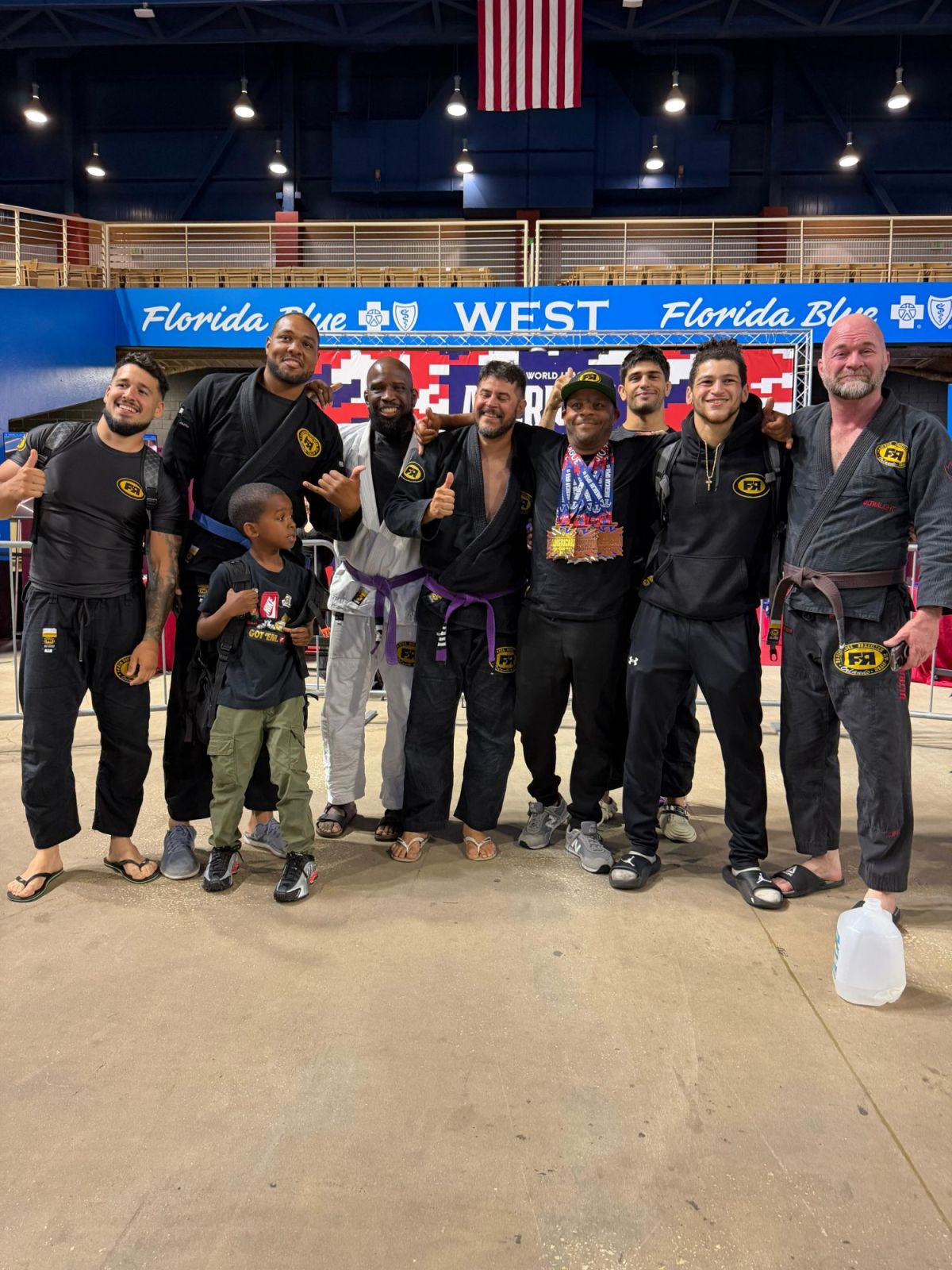
The hardest part of competing wasn’t the match.
It wasn’t the opponent.
It wasn’t the weight cut.
It wasn’t even the physical demand.
It was everything that happened before I stepped on the mat to grapple guys whose names I only knew because they were in my bracket.
If you’ve ever competed, you already know what I’m talking about.
That quiet build-up.
That shift in your body.
That moment when your mind starts asking questions you don’t really want to answer.
What if I lose?
What if I look bad?
What if I’m not ready?
What if I get hurt?
For me, it wasn’t just nerves. It felt like a mental war.
The Build-Up
In the days leading up to the competition, I could feel it creeping in.
Not all at once.
Just small thoughts here and there.
A little tension in my body.
That subtle feeling that something important was coming… and I wasn’t completely in control of how I was going to respond to it.
I tried to stay focused. Training helped. Routine helped.
But the closer it got, the louder my mind became.
Eventually, I started having trouble sleeping. In training, I found myself pushing harder than I needed to, sometimes to the point of overtraining.
That started to affect my confidence, which only made the anxiety and insomnia worse.
The Morning Of
The day of the competition, it hit hard.
My body felt it before my mind even caught up.
Heart rate up.
Stomach tight.
That restless energy you can’t really shake.
And here’s the part people don’t always admit:
Even when you’ve trained.
Even when you’re prepared.
Even when you know you belong there…
Your mind can still try to convince you otherwise.
The Mental War
At some point, I realized this wasn’t just about Jiu Jitsu.
This was about how I respond to pressure.
Because the thoughts didn’t come once, they kept coming.
You’re not ready.
You should’ve trained more.
What if you lose every match?
And I had a choice.
I could engage every thought…
Or I could let them be there without letting them control me.
That shift was the key.
Instead of trying to get rid of the anxiety, I started focusing on how to move with it.
Breathing.
Staying present.
Reminding myself that I’ve been here before, not this exact moment, but this feeling.
What Helped Me
I’m not going to pretend I eliminated the anxiety. I didn’t.
But I learned how to manage it.
A few things made a difference:
1. Accepting the anxiety instead of fighting it
The more I tried to push it away, the stronger it felt. Once I accepted it as part of the experience, it lost some of its power.
There’s a quote I’ve heard from Jocko Willink that stuck with me: Do it scared.
That mindset helped me push through every competition I’ve been in.
2. Focusing on what I could control
My breathing. My movement. My mindset. Not the outcome.
3. Keeping it simple
Not overthinking strategy. Trusting my training.
4. Changing the narrative
Instead of “something’s wrong,” I started seeing it as:
This is what it feels like to care.
And I reminded myself of something simple: your body doesn’t really know the difference between anxiety and excitement. It’s all about how you interpret it.
So I started telling myself:
I’m excited to do the sport I love in a bigger arena.
Stepping on the Mat
When it was finally time, something shifted.
Not because the anxiety disappeared…
But because I stopped resisting it.
I stepped on the mat with everything I had. Doubt. Adrenaline. Nerves. All of it.
And in that moment, it wasn’t about being fearless.
It was about showing up anyway.
What I Took From It
Competing showed me something important:
The real opponent isn’t always the person across from you.
Sometimes it’s the voice in your head trying to convince you not to show up fully.
And if you can learn how to navigate that…
You don’t just become a better competitor.
You become stronger in every area of your life.
Final Thoughts
If you’re dealing with anxiety before competing, you’re not alone. Even professional grapplers and MMA fighters experience this regularly.
It doesn’t mean you’re not ready.
It doesn’t mean you don’t belong.
It means you care.
The goal isn’t to eliminate the anxiety.
The goal is to learn how to move forward with it.
Because the real win isn’t just what happens on the mat.
It’s the fact that you stepped on it in the first place.

