I Wasn’t Just Fighting My Opponent. I Was Fighting My Mind

The hardest part of competing wasn’t the match.

It wasn’t the opponent.
It wasn’t the weight cut.
It wasn’t even the physical demand.

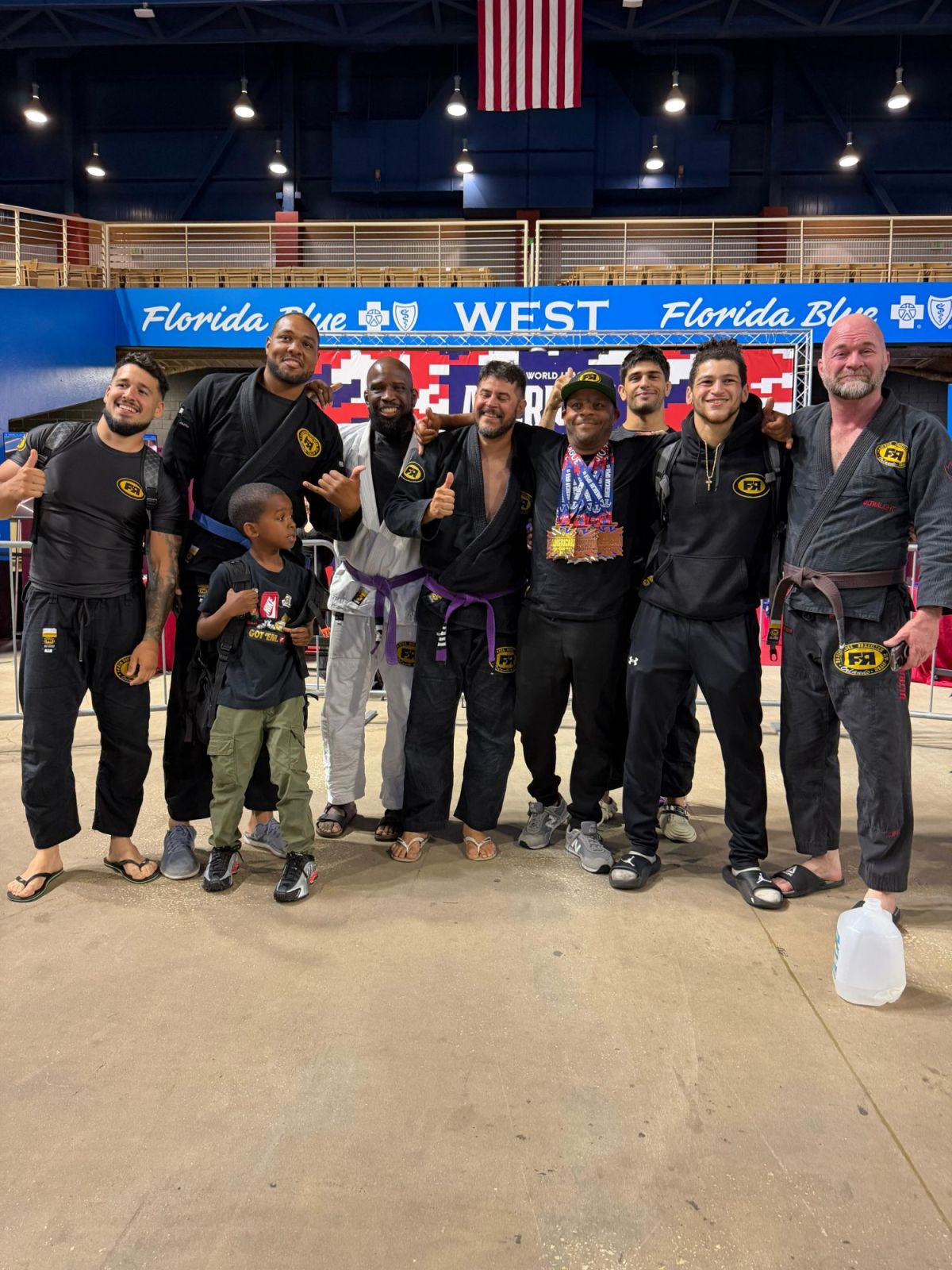
It was everything that happened before I stepped on the mat to grapple guys whose names I only knew because they were in my bracket.

If you’ve ever competed, you already know what I’m talking about.

That quiet build-up.
That shift in your body.
That moment when your mind starts asking questions you don’t really want to answer.

What if I lose?
What if I look bad?
What if I’m not ready?
What if I get hurt?

For me, it wasn’t just nerves. It felt like a mental war.


The Build-Up

In the days leading up to the competition, I could feel it creeping in.

Not all at once.

Just small thoughts here and there.
A little tension in my body.
That subtle feeling that something important was coming… and I wasn’t completely in control of how I was going to respond to it.

I tried to stay focused. Training helped. Routine helped.

But the closer it got, the louder my mind became.

Eventually, I started having trouble sleeping. In training, I found myself pushing harder than I needed to, sometimes to the point of overtraining.

That started to affect my confidence, which only made the anxiety and insomnia worse.


The Morning Of

The day of the competition, it hit hard.

My body felt it before my mind even caught up.

Heart rate up.
Stomach tight.
That restless energy you can’t really shake.

And here’s the part people don’t always admit:

Even when you’ve trained.
Even when you’re prepared.
Even when you know you belong there…

Your mind can still try to convince you otherwise.


The Mental War

At some point, I realized this wasn’t just about Jiu Jitsu.

This was about how I respond to pressure.

Because the thoughts didn’t come once, they kept coming.

You’re not ready.
You should’ve trained more.
What if you lose every match?

And I had a choice.

I could engage every thought…
Or I could let them be there without letting them control me.

That shift was the key.

Instead of trying to get rid of the anxiety, I started focusing on how to move with it.

Breathing.
Staying present.
Reminding myself that I’ve been here before, not this exact moment, but this feeling.


What Helped Me

I’m not going to pretend I eliminated the anxiety. I didn’t.

But I learned how to manage it.

A few things made a difference:

1. Accepting the anxiety instead of fighting it
The more I tried to push it away, the stronger it felt. Once I accepted it as part of the experience, it lost some of its power.

There’s a quote I’ve heard from Jocko Willink that stuck with me: Do it scared.
That mindset helped me push through every competition I’ve been in.

2. Focusing on what I could control
My breathing. My movement. My mindset. Not the outcome.

3. Keeping it simple
Not overthinking strategy. Trusting my training.

4. Changing the narrative
Instead of “something’s wrong,” I started seeing it as:
This is what it feels like to care.

And I reminded myself of something simple: your body doesn’t really know the difference between anxiety and excitement. It’s all about how you interpret it.

So I started telling myself:
I’m excited to do the sport I love in a bigger arena.


Stepping on the Mat

When it was finally time, something shifted.

Not because the anxiety disappeared…
But because I stopped resisting it.

I stepped on the mat with everything I had. Doubt. Adrenaline. Nerves. All of it.

And in that moment, it wasn’t about being fearless.

It was about showing up anyway.


What I Took From It

Competing showed me something important:

The real opponent isn’t always the person across from you.

Sometimes it’s the voice in your head trying to convince you not to show up fully.

And if you can learn how to navigate that…

You don’t just become a better competitor.

You become stronger in every area of your life.


Final Thoughts

If you’re dealing with anxiety before competing, you’re not alone. Even professional grapplers and MMA fighters experience this regularly.

It doesn’t mean you’re not ready.
It doesn’t mean you don’t belong.

It means you care.

The goal isn’t to eliminate the anxiety.

The goal is to learn how to move forward with it.

Because the real win isn’t just what happens on the mat.

It’s the fact that you stepped on it in the first place.

Sometimes I Suck, And That’s Part of the Process

There are days where I leave the mat feeling like I’ve unlocked something. Days where I feel like a ninja. My timing feels sharp, my technique flows, and I catch a couple of subs that make me think, “Yeah, I’m getting somewhere.”

And then there are days (more than I like to admit) when I walk out of class shaking my head. Frustrated. Tired. Even embarrassed. Asking myself questions I thought I had stopped asking a long time ago.

Why did I freeze in that position?
Why couldn’t I get out of that side control?
Why did I feel like I forgot everything I’ve learned in the last year?

Some days, I just suck, and last night was one of them. Last night I fought for my life with an energetic, tough 14 year old. I struggled with a young, athletic 20 something and I got absolutely destroyed by a grizzly guy who turns 56 next month.

I left the gym feeling like, yeah, tonight was not my night.
And as much as I hate it in the moment…
I’ve learned that it’s not only normal, it’s necessary.

Progress Doesn’t Look How You Think It Will

When I first started training, I assumed progress would be clean and steady, like leveling up in a video game. You train, you improve. You drill, you retain. You roll, you dominate.

But the mats and Jiu Jitsu don’t care about your expectations.

To take a cue from things I’ve learned in psychology. Progress isn’t always linear and in Jiu Jitsu, progress isn’t only not linear, it spirals. You revisit the same positions over and over. You “learn” something five different times before it sticks. And just when you think you’ve got it figured out, you roll with someone who exposes all the gaps in your game.

It’s humbling. And at times, it’s exhausting.

But the truth is, those days where you feel like you suck?
They’re often the ones pushing you closest to growth.

The Humility Behind the Belt

People see the belt you wear and assume that means you’ve figured something out. And sure, you’ve learned some things, you’ve put in the hours, you’ve been tapped more times than you can count, you’ve survived the awkward white belt phase and kept coming back.

But what they don’t see is the doubt that still lingers.

Even now, as a purple belt, there are days I feel like a beginner. I second-guess my instincts. I get stuck in positions I should be able to escape. I roll with someone newer who catches me slipping, and my ego wants to spiral.

That’s when I have to remind myself: this is part of it.

You don’t grow by always winning. You grow by getting uncomfortable, by testing the limits of your timing, by rolling with people who challenge you mentally and physically. You grow by getting exposed and deciding to come back anyway.

Last night, I got worked. I could’ve blamed it on being exhausted, on the lack of sleep, on just not having it in me to go hard. And yeah, maybe all of that was true. But they’re also just easy outs. The truth is, it wasn’t my night. And instead of running from that or dressing it up with excuses, I’m learning to sit with it. To let it teach me something.

The point is, I showed up and I’ll keep showing up, even when I’m not feeling at my best and even when it’s not my night to be the hammer, but instead the nail.

What the “Suck” Actually Teaches You

Let me tell you what those frustrating days like last night have taught me:

  • They teach me humility. To let go of the image I have of myself and just be a student of the art again.
  • They teach me patience, not just with the art, but with myself.
  • They teach me resilience, to shake off the bad rounds, the bruised ego, and still show up the next day.

Most importantly, they’ve taught me that sucking isn’t failure, it’s a sign that I’m still learning. That I’m pushing my limits. That I’m evolving.

Staying in your comfort zone doesn’t lead to breakthroughs.
Feeling clumsy, out of rhythm, exposed, that’s where the real growth is hiding.

I see it all the time. Students who only want to train when they feel 100%. As soon as they’re tired or slightly off, they avoid rolling, afraid of “losing,” of not looking sharp. Of judgement. But here’s the truth:

There is no losing in training.

I try to encourage them to show up anyway. To train when they’re tired. When they’re not at their best. When they can’t go 100%. That’s when you learn to breathe. To defend. To survive. And honestly? That’s some of the most valuable training you’ll ever do.

Because the outside world doesn’t care if you didn’t sleep well last night.
It doesn’t care if your body aches or your mind is scattered.
Life’s not going to wait for you to feel perfect before it tests you.

You have to learn to show up anyway.
To give what you can.
To stay in the fight, even when it’s not your day.

You’re Not Alone, Even If It Feels Like It

I used to think I was the only one who felt this way. Like everyone else was improving on a straight line and I was the only one who couldn’t get my body or brain to cooperate.

But as I’ve talked to more training partners and coaches over the years, I’ve realized everybody feels this at least sometimes.

Even black belts.
Even competitors.
Even the people who look smooth and confident every round.

They’ve just learned how to ride the wave instead of fighting it.

They know that feeling lost, tired, or off doesn’t mean you’re backsliding. It just means you’re in the middle of the work. It means you’re human.

Final Thoughts

So yeah. Sometimes I suck. Sometimes I wonder “what am I even doing with my life?” LOL.

And honestly? I’ve made peace with that.

Not because I’m okay with mediocrity, but because I’ve finally accepted that mastery looks messy up close. The road to improvement is paved with awkward rolls, ego checks, forgotten techniques, and quiet nights where you wonder if you’re cut out for this.

But I keep showing up.
Not because I always feel great…
But because I know that’s what growth actually looks like.

Some days you feel sharp. Like a ninja even.
Some days you feel like you’ve never trained before.
And both are part of the journey.

So if you’re feeling stuck, if you’re questioning yourself, if you’re sitting in your car after class wondering if you even belong on the mat, take a breath. You’re not alone.

You don’t have to be perfect to be progressing.
You just have to keep going. You have to keep showing up and as they often say, learn to embrace the suck.

Grappling With My Hematoma: When the Fight Goes Beyond the Mat

Sometimes the toughest opponent doesn’t wear a gi. It doesn’t slap and bump. It doesn’t tap out. Sometimes, the fight is with your own body and the only mat is the one you’re forced to stay off of.

The Onset

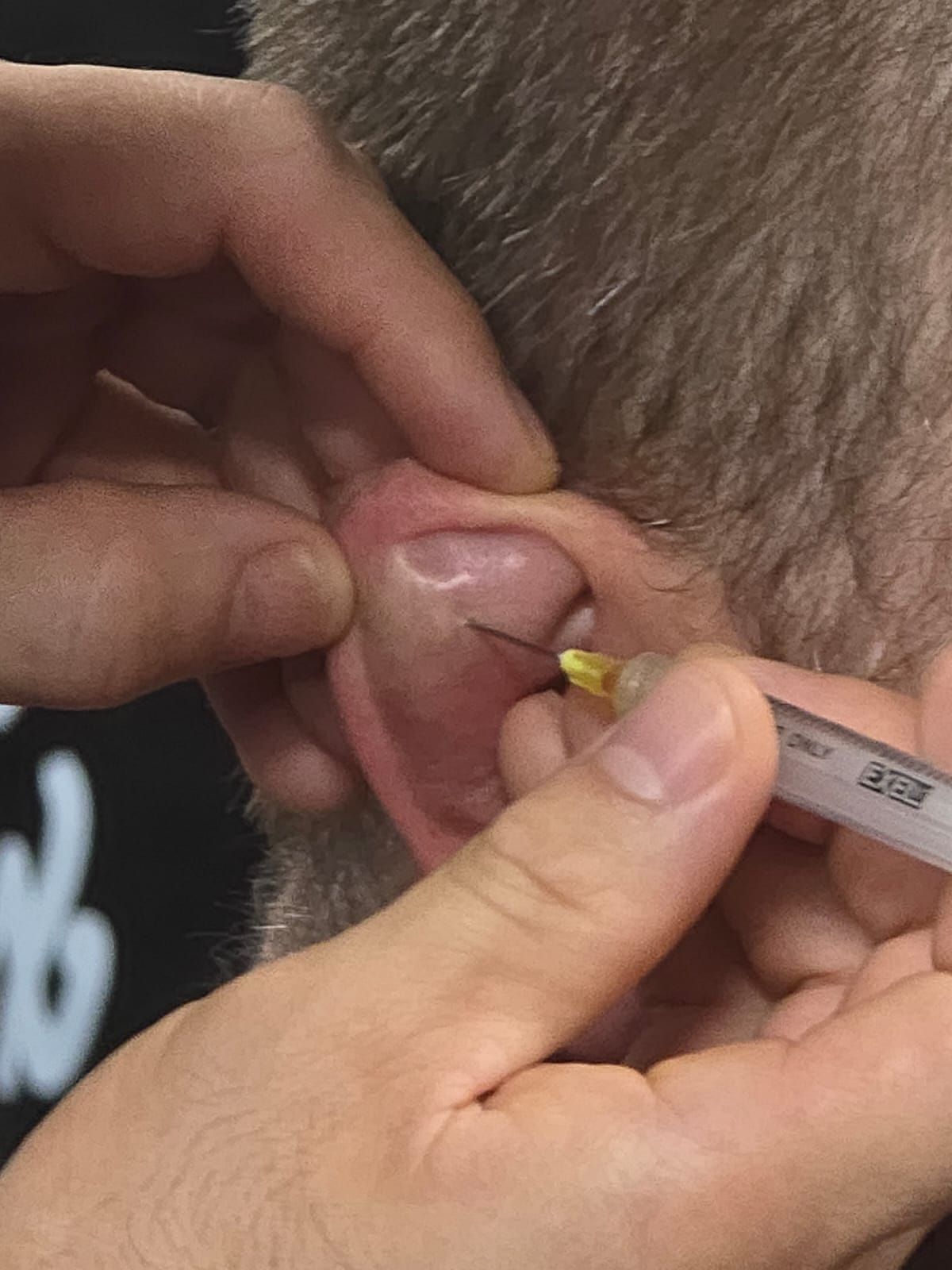
It started like so many other injuries in this sport do, with something that didn’t seem like a big deal. A little pain, a little swelling. Maybe just the aftereffects of a hard roll. But this time was different. I didn’t pay it much attention and kept rolling until one day after an open mat someone pointed out my ear had swollen up.  

And that’s when I knew: this wasn’t just a bruise. It was something more.

The Diagnosis

When I finally went to get it checked out, I was met with a word I wasn’t expecting: hematoma.
A collection of blood pooling in the muscle tissue. A reminder that the body has its own limits, even when the mind is still chasing the next belt, the next stripe, the next roll.

The doctor’s advice? Get it drained. Compressed. Ice. Rest. No training. Elevation. All the usual stuff that sounds simple until you realize what it really means: time away from the thing that keeps you grounded.

Ear hematomas are common in grappling and often lead to cauliflower ear. Some grapplers wear it like a badge of honor and I get that. But I wasn’t ready for the look. Having this happen to me for the first time in over six years of training caught me completely off guard.

The Mental Toll

What caught me off guard wasn’t the physical pain. It was the mental stillness. The way the days felt slower without the rhythm of training. The way the feelings I had used training to quiet came rushing back in. Sadness. Insecurity. Loneliness.


BJJ isn’t just exercise for me. It’s therapy. It’s where I process life, release tension, find clarity.

And without it, the silence crept in.
The doubts.
The restlessness.
The subtle fear that I might lose progress or worse, lose part of myself.

Recovery As a New Kind of Roll

Overtime, I realized recovery is its own kind of training.
You need patience. You need body awareness. You have to let go of ego. You have to listen.
Every time I resisted rest, I prolonged the healing. Every time I honored it, I took a step toward returning.

So I started to treat recovery like a roll: stay calm, breathe, don’t force the position. Adapt to what’s in front of you.

What I’ve Learned

This hematoma taught me that resilience isn’t just about pushing through, it’s also about knowing when to pause.
It taught me that slowing down doesn’t mean stopping.
That healing is a part of training. To trust my body.
And that sometimes, the most important grappling match is the one happening within.

Still Grappling

I’m still healing. Still learning. Still grappling (with headgear until it’s 100%).
But I have a deeper respect for my body, my mind, and the balance between drive and rest.

Because the mat will always be there.