Chasing the Belt, Finding the Love

I came across a Reddit post the other day from a three stripe brown belt who said something that I found really interesting.

He said that he wanted to get a black belt in Jiu Jitsu because he knew it would be hard, and wrote:

“I didn’t really start liking BJJ until about mid-purple. I always just considered it cardio that was fun enough that I could stick with.”

That hit different.

Not because it was surprising, but because it was honest. For a lot of us, the belt was the goal long before the art ever was. We showed up with ambition. We wanted to be tough. Respected. Skilled. Some of us wanted the challenge. Some wanted the identity. And some of us just wanted to win at something.

But love for the sport and the art? That came later. For some, much later and unfortunately, lots of people who chase the belt quit when they realize it’s not going to be fast or easy.


The Goal That Got You in the Door

I started training after my best friend, who had already been training for a number of years, kept suggesting I switch from powerlifting to Jiu Jitsu for better overall health.

I didn’t love Jiu Jitsu at first. I gave myself a goal: I wouldn’t quit for the first three months. And I didn’t.

Even after that, I still didn’t love it, but I gave myself another three months. And after that? Well, to be honest, I was falling in love with it. Not because I was chasing a belt, but because it was challenging. And because I found a community I didn’t realize I needed.

A lot of people assume that if you’re showing up every week drilling, rolling, pushing through injuries and frustration, you must love Jiu Jitsu.

But sometimes, what we really love is the idea of becoming great at something. The validation. The transformation. The person we hope to be on the other side of the grind.

There’s nothing wrong with that. For a lot of us, the belt is what gets us in the door. What keeps us coming back when nothing else does. But chasing a belt and falling in love with the art are two different things.


When the Switch Flips

Then one day, something shifts.

Maybe it’s in the middle of a round where everything just clicks.
Maybe it’s watching yourself recover from a bad position calmly instead of panicking.
Maybe it’s when you catch a move that used to confuse you and you land it without thinking.

That’s when the belt fades into the background.
And you realize: you’re not just training Jiu Jitsu anymore.
You’re starting to feel Jiu Jitsu.

I’ve had a number of moments like this. Times when I easily handled an athletic 20 year old or dominated a former wrestler I thought I wouldn’t stand a chance to get. Times when I felt like I was in a video game and not just the nail being hammered.

As the brown belt I mentioned earlier added:

“Around mid-purple belt I started to notice that white belts were starting to feel ‘effortless.’ That’s when I started feeling like I might actually not suck at Jiu Jitsu. I really like it now. It’s super fun, but my primary goal is still getting a black belt. Hopefully getting it doesn’t cause me to lose motivation.”


You Don’t Have to Love It From the Start

I love training. It doesn’t always love me back though LOL.

I’ve had my share of injuries and frustrations that made me question if I should just give up. But I don’t. And usually, those thoughts are fleeting. After a day or two, I’m back on the mats, happy to be there, even on the days where I feel like I suck at it.

If you’ve been training for years and still aren’t sure how you feel about this thing, you’re not alone. You’re not doing it wrong. You’re just on your way to something deeper.

The love doesn’t always come during the honeymoon phase.
Sometimes, it’s slow.
Sometimes, it only shows up when your ego quiets down enough to notice it.

But when it does come?
You stop needing to impress anyone.
You stop fearing bad days.
You just show up, because you want to. Because it grounds you. Because it’s yours now.


Final Thoughts

For some of us, the belt came before the love.
But the love? That’s what keeps us here.

Jiu Jitsu doesn’t have to be love at first sight.
Sometimes it’s more like that relationship that starts off rocky with misunderstandings, growing pains, and hard lessons, but becomes the one that changes you forever.

So, keep chasing the belt if you want.
Just know that somewhere along the way…
you might find something even better.

Grappling With My Hematoma: When the Fight Goes Beyond the Mat

Sometimes the toughest opponent doesn’t wear a gi. It doesn’t slap and bump. It doesn’t tap out. Sometimes, the fight is with your own body and the only mat is the one you’re forced to stay off of.

The Onset

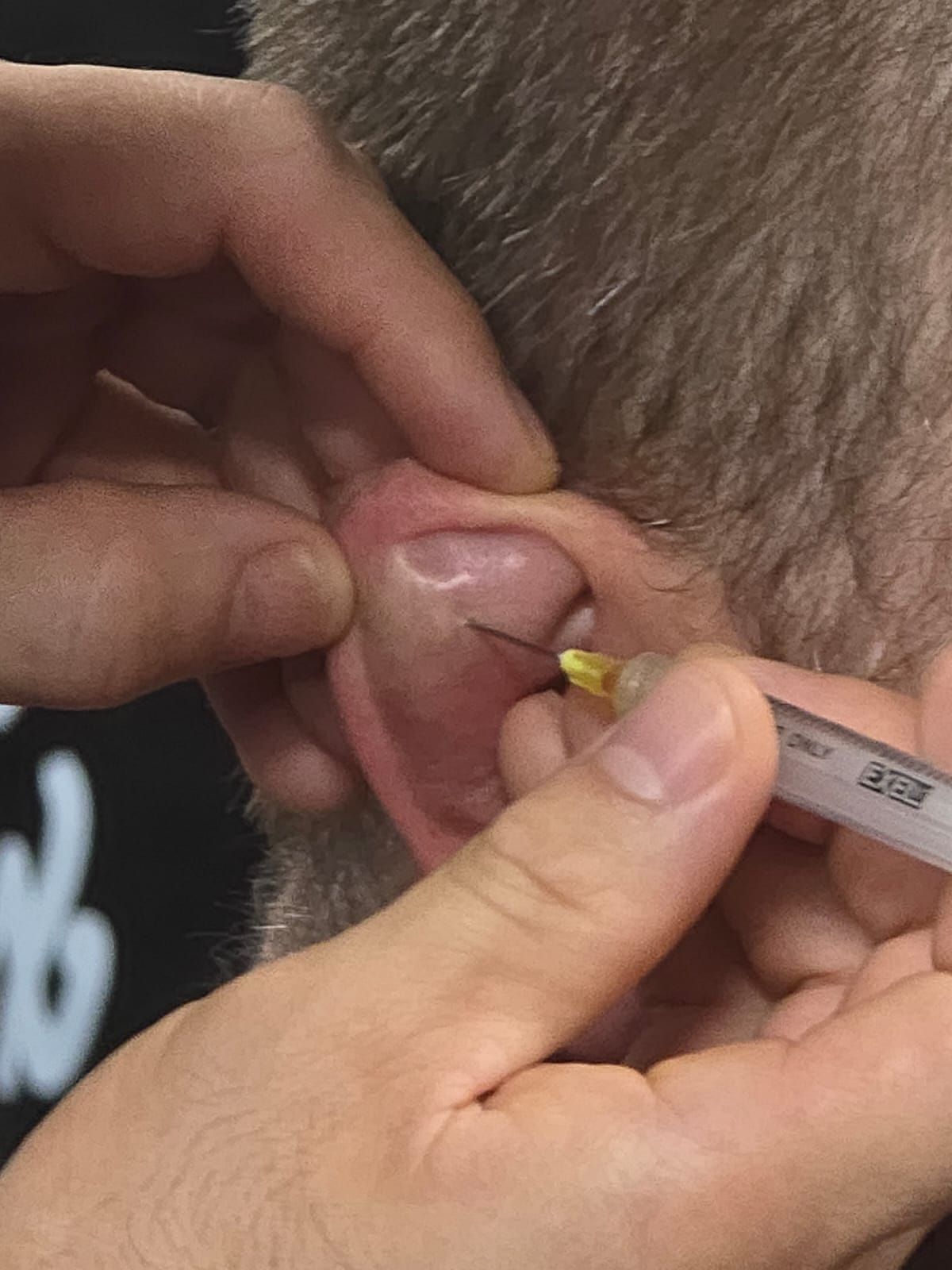
It started like so many other injuries in this sport do, with something that didn’t seem like a big deal. A little pain, a little swelling. Maybe just the aftereffects of a hard roll. But this time was different. I didn’t pay it much attention and kept rolling until one day after an open mat someone pointed out my ear had swollen up.  

And that’s when I knew: this wasn’t just a bruise. It was something more.

The Diagnosis

When I finally went to get it checked out, I was met with a word I wasn’t expecting: hematoma.
A collection of blood pooling in the muscle tissue. A reminder that the body has its own limits, even when the mind is still chasing the next belt, the next stripe, the next roll.

The doctor’s advice? Get it drained. Compressed. Ice. Rest. No training. Elevation. All the usual stuff that sounds simple until you realize what it really means: time away from the thing that keeps you grounded.

Ear hematomas are common in grappling and often lead to cauliflower ear. Some grapplers wear it like a badge of honor and I get that. But I wasn’t ready for the look. Having this happen to me for the first time in over six years of training caught me completely off guard.

The Mental Toll

What caught me off guard wasn’t the physical pain. It was the mental stillness. The way the days felt slower without the rhythm of training. The way the feelings I had used training to quiet came rushing back in. Sadness. Insecurity. Loneliness.


BJJ isn’t just exercise for me. It’s therapy. It’s where I process life, release tension, find clarity.

And without it, the silence crept in.
The doubts.
The restlessness.
The subtle fear that I might lose progress or worse, lose part of myself.

Recovery As a New Kind of Roll

Overtime, I realized recovery is its own kind of training.
You need patience. You need body awareness. You have to let go of ego. You have to listen.
Every time I resisted rest, I prolonged the healing. Every time I honored it, I took a step toward returning.

So I started to treat recovery like a roll: stay calm, breathe, don’t force the position. Adapt to what’s in front of you.

What I’ve Learned

This hematoma taught me that resilience isn’t just about pushing through, it’s also about knowing when to pause.
It taught me that slowing down doesn’t mean stopping.
That healing is a part of training. To trust my body.
And that sometimes, the most important grappling match is the one happening within.

Still Grappling

I’m still healing. Still learning. Still grappling (with headgear until it’s 100%).
But I have a deeper respect for my body, my mind, and the balance between drive and rest.

Because the mat will always be there.

The Role of Good Training Partners in Sharpening Your Game

There’s a saying in Jiu Jitsu: iron sharpens iron. But iron doesn’t sharpen itself. it needs resistance, friction, and the right kind of partner.

In a sport where it’s easy to obsess over your own belt, your own progress, and your own survival on the mat, it’s easy to forget that growth isn’t a solo mission. Your coaches can guide you, but it’s your training partners who shape you day after day. They are your mirrors, your measuring sticks, your silent coaches. Unlike some martial arts, it’s impossible to truly learn and level up in Jiu Jitsu alone.

I’ve come to realize the people I train with aren’t just bodies to drill with, they’re essential to my progress.


Good Training Partners Make You Better. Here’s How

The best training partners:

  • Give honest feedback. They’ll tell you when your defense is sloppy, when your arm’s in danger, or when you’re telegraphing your next move. They don’t let you build bad habits.
  • Expose your blind spots. They don’t let you stay comfortable. They find the holes in your game and help you see them.
  • Push you at your edge. They roll just hard enough to test you, but not to break you. They meet you where your growth happens.
  • Trust you enough to correct you. Feedback isn’t always easy to give. Good partners risk awkwardness to help you.
  • Stay consistent. They keep showing up, even as you start getting better. They’re not just there to win. They’re there to grow with you.

Signs You’ve Got a Good Training Partner

You know you’ve got a good one when:

  • They roll to help you grow, not to just dominate you all the time.
  • They can give and receive feedback without getting defensive.
  • They’ll say, “Hey, you’re leaving your arm out there.”
  • They don’t avoid rolling with you when the rolls get harder as you improve.
  • They ask, “What are you working on? Want to rep that?”

How to Be a Good Training Partner

It’s a two-way street. Here’s how to give what you hope to get:

  • Ask after a roll: “What did you notice? Anything I can work on?”
  • Offer specific, helpful feedback: “You kept leaving space when you passed on that side.”
  • Roll with people at all levels. Don’t just chase tough rolls or easy wins.
  • Help newer students feel welcome. Share what’s been shared with you.
  • Say thank you. Seriously. “Thanks for that roll—that showed me what I need to work on.”

A Personal Story

Just last week I went to a noon No-Gi class and rolled with some guys I generally don’t get to roll with as I usually go to night classes. These guys were tough. Their styles were similar because they train together often and their game was what my game is (pass and smash) except… better. They called me out for being on my knees too much and not generating enough pressure. They called me out for violating the toe control rule, or whatever it is called. I had never hard of it before that, but it’s when trying to pass an opponent in open guard. I kept getting too close to my opponent with my feet without first establishing grips. Feel free to clarify this for me if you know more, but it was and is still new to me. They also called me out for other small holes I have in my game, but it was the first time in a long time someone had called out my weaknesses so specifically. I mean, I knew I had weaknesses in my game, but it was great to have someone else call them out and offer sound advice to start fixing it. I left that training session feeling invigorated and ready to start working on closing those holes and appreciative of those two guys for pushing me and pointing them out to me.


Closing

Good training partners don’t just help you survive the next roll, they help you evolve. They sharpen your game, your awareness, and your ability to stay humble. If you’ve found people like that in your gym, keep them close, appreciate them, and do your part to be that person for someone else.

Because in Jiu Jitsu, we don’t grow alone. We grow together.

The Calm After the Storm: How Jiu Jitsu Grounds You After a Long Day

No matter how exhausted I am after getting off from work, I can usually find the strength to drag myself to class. There’s something about stepping onto the mat after a long day that feels like an exhale your body has been holding onto for hours.

For many of us, the day begins in chaos, waking up groggy, shuttling kids off to school, facing the noise and demands of work, feeling pulled in a dozen different directions. By the time we get off work, our nervous systems are fried, and our minds are running in loops. That’s where Jiu Jitsu comes in.

When people talk about Brazilian Jiu Jitsu (BJJ), they often highlight its intensity, its competitiveness, and the physical toll it takes. But what doesn’t get talked about enough is the calm that follows the storm, the way training can settle a restless mind and anchor you to the present.

The Reset Button

Walking into the gym is like stepping into a completely different reality. You strip off the titles, the expectations, and the stress. Whether you’re a therapist, a parent, a nurse, or a construction worker, once you tie that belt, you’re just another person on the mat.

The physical exertion of drilling and sparring forces you to be fully present. There’s no room to worry about unpaid bills or unresolved arguments when someone is trying to pass your guard or lock in a choke. Your survival instinct kicks in, but in a safe, controlled environment. This, in itself, is therapy.

You move from fight-or-flight to focus and flow.

Why the Calm Feels So Good

Most of the time I leave Jiu Jitsu feeling so much lighter than I did when I first walked in, and I’m not just talking about the water weight I lost from sweating. It’s one of the main reasons I push myself to go, especially after a particularly hard day.

From a mental health perspective, training BJJ activates several key systems in the body. You get a surge of endorphins, your cortisol levels begin to drop, and you start to regulate your breathing. When you finish class, the same problems might still exist, but your relationship to them has shifted. They’re no longer screaming in your face.

And for those of us who struggle with anxiety, depression, or even burnout from emotionally demanding work, Jiu Jitsu becomes more than a workout. It becomes a lifeline.

Returning to the Body

So much of life keeps us trapped in our heads. We replay conversations, obsess over what we could have said or done differently, and catastrophize about the future. But when you train, you return to the body. You start noticing your breath. You begin to feel the rhythm of movement. You learn to read your training partner’s body language, and in doing so, you become more attuned to your own.

This somatic awareness is healing. Trauma, stress, and emotional pain often live in the body (check out The Body Keeps The Score if you’re really interested in learning more about that) and Jiu Jitsu creates a space for them to move, to be expressed, and eventually, to be released.

The Post-Roll Stillness

There’s a particular kind of stillness that settles in after a hard roll. Your muscles are spent, your gi is soaked, and your heart rate begins to slow. You lie on your back, looking up at the ceiling, breathing deeply. That stillness isn’t just physical, it’s emotional. It’s spiritual.

In that moment, you’re not thinking about tomorrow’s tasks or yesterday’s regrets. You’re just… here. Alive. Present. At peace.

Taking It Off the Mat

The calm after class doesn’t have to stay at the gym. It can bleed into how we parent, how we show up in relationships, and how we manage stress. The more consistent we are with training, the more we begin to carry that grounded presence into everyday life.

Jiu Jitsu won’t fix all your problems. But it can help you meet them from a place of strength, clarity, and emotional balance.

So the next time you’ve had a day that leaves you feeling wrecked and disconnected, step onto the mat. Let the storm of training clear away the debris. And let the calm after remind you of who you are beneath the stress.

You’re more than what happened to you today. You’re a fighter. And fighters know how to find peace in the middle of chaos.

As for morning class people? Well, it definitely takes a special kind of person to wake up and train at 6am 🙂