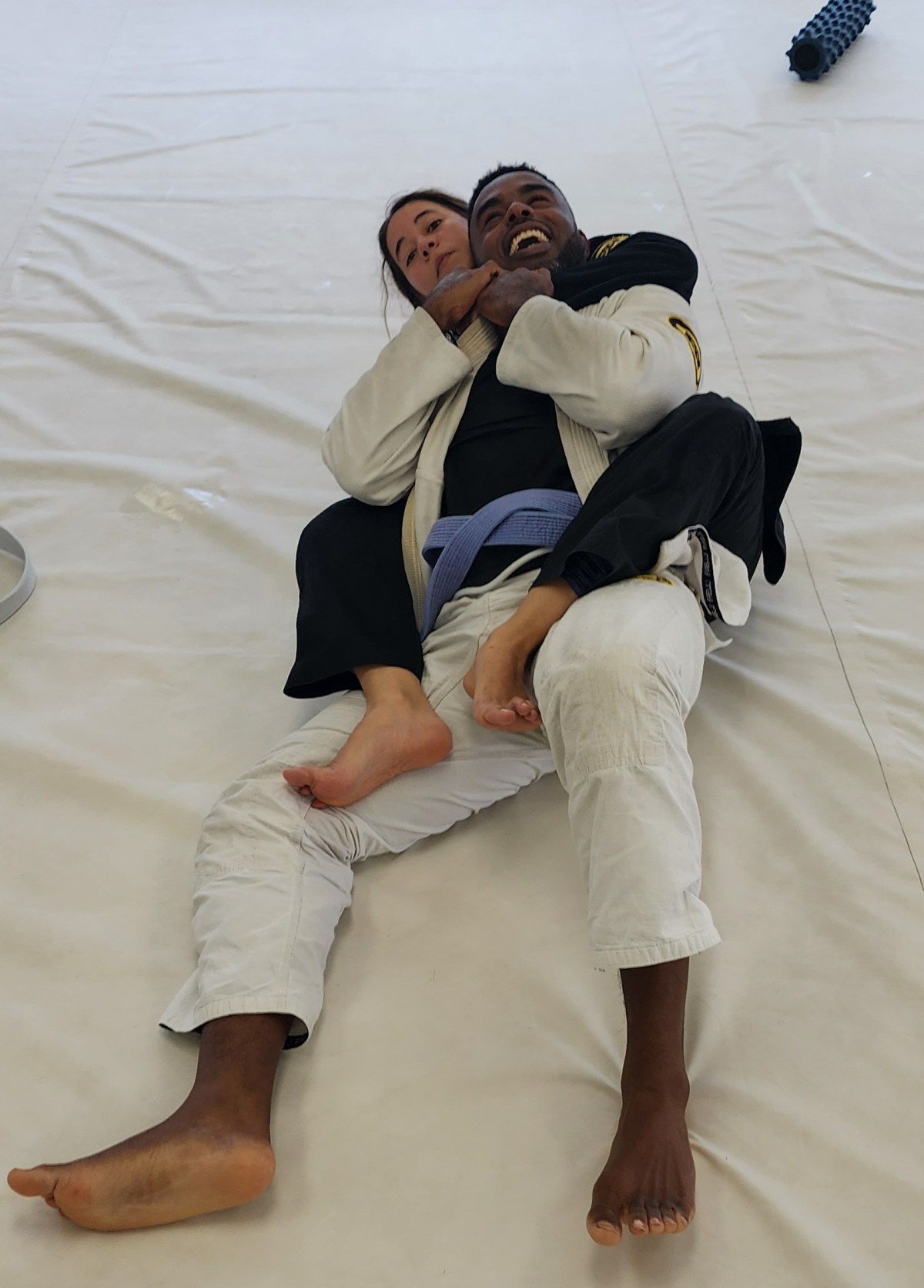
Mind, Body, and Gi: The Psychological Benefits of Jiu Jitsu Training


There’s an old saying in martial arts circles: “Black belts are merely white belts who refused to quit.” Beyond the physical prowess and tactical skill that Brazilian Jiu Jitsu (BJJ) practitioners cultivate, it’s the mental fortitude, the grit, that makes this adage ring true. But the psychological impact of Jiu Jitsu extends far beyond perseverance. Through its physical maneuvers, strategic gameplay, and immersive nature, BJJ provides practitioners with a wealth of mental health benefits.

The Power of Now: Mindfulness in Action

Mindfulness, the practice of focusing on the present moment, is a cornerstone of mental well-being. It is often recommended as a tool to alleviate a host of mental health concerns, including stress, anxiety, and depression. The practice of Jiu Jitsu, while physically intense and demanding, is fundamentally an exercise in mindfulness. Whether you’re drilling a technique or engaging in a sparring session, your mind must be entirely present on the mats. You’re focused on your breathing, your movements, and your opponent’s actions. This focused attention on the here and now leaves no room for ruminations about the past or anxieties about the future.

Self-Efficacy and Mastery

Self-efficacy, the belief in our ability to succeed in specific situations, is a crucial aspect of mental health. It influences our motivation, decision-making processes, and emotional responses. In BJJ, as you progress in your training, master new techniques, and see your skills improve, your sense of self-efficacy naturally increases. The consistent challenge followed by the eventual mastery of techniques in Jiu Jitsu helps develop a mindset of growth and adaptability. This mindset, once ingrained, often seeps into other areas of life, improving our overall sense of well-being and competence.

The Emotional Release

Jiu Jitsu is more than just an excellent physical workout; it’s also a potent form of emotional release. Like other physical activities, it stimulates the release of endorphins, neurotransmitters that act as natural mood elevators. But it’s more than just the ‘runner’s high’ at play here. The physical intensity, the act of grappling and exerting your strength, provides a tangible outlet for pent-up emotions. The mats can become a safe space where you can channel your frustration, anxiety, or stress in a constructive, cathartic manner.

Building Resilience

Resilience, our ability to bounce back from adversity, is an essential psychological strength. In the world of Jiu Jitsu, resilience is not just encouraged; it’s required. Every time you tap, every time a technique doesn’t work, you face a mini-adversity. And each time you dust off and try again, you are building your resilience. Over time, this capacity to ‘roll with the punches’ can extend beyond the mat, helping you deal more effectively with life’s challenges.

A Tribe of Your Own: The Power of Community

We are innately social beings, and having a sense of belonging is crucial for our mental health. A Jiu Jitsu dojo is not just a place to train; it’s a community. It’s a place where respect, discipline, and support are core tenets. This environment fosters positive relationships and provides a social network that can act as a buffer against stress and other psychological issues.

Empowerment and Confidence

Empowerment is a powerful antidote to feelings of helplessness that often accompany mental health problems. As you progress in your Jiu Jitsu journey, as you become more proficient and confident in your skills, you experience a tangible sense of empowerment. This confidence can extend to other areas of life, improving your overall self-esteem and sense of worth.

Caution: Jiu Jitsu is Not a Cure

While the mental health benefits of Jiu Jitsu are manifold, it’s important to remember that it is not a replacement for professional psychological help. It is a tool, an adjunct to traditional therapeutic methods. It can enhance the effects of therapy, medication, or other treatments, but it should not be seen as a stand-alone solution for mental health concerns.

So why Jiu Jitsu? Why not just a regular gym workout or meditation? Because Jiu Jitsu is a comprehensive package. It’s a physical workout, a mindfulness practice, a form of therapy, and a social gathering rolled into one. It’s a discipline that demands respect for the body and nurtures the mind in the process.

Jiu Jitsu is a journey, one where the destination is not a belt color but a better understanding of yourself. It’s a path that, if walked with an open mind, can provide mental fortitude, emotional balance, and psychological well-being.

To paraphrase the words of Master Carlos Gracie Jr., “Jiu Jitsu is for anyone who seeks a path of self-knowledge, self-improvement, and self-confidence.” In the intricate dance of grips, rolls, and submissions, there’s a healing rhythm, a road to mental peace. So step on the mat, put on your gi (or not if you prefer no gi 🙂 ), and start this beautiful journey. One roll at a time.
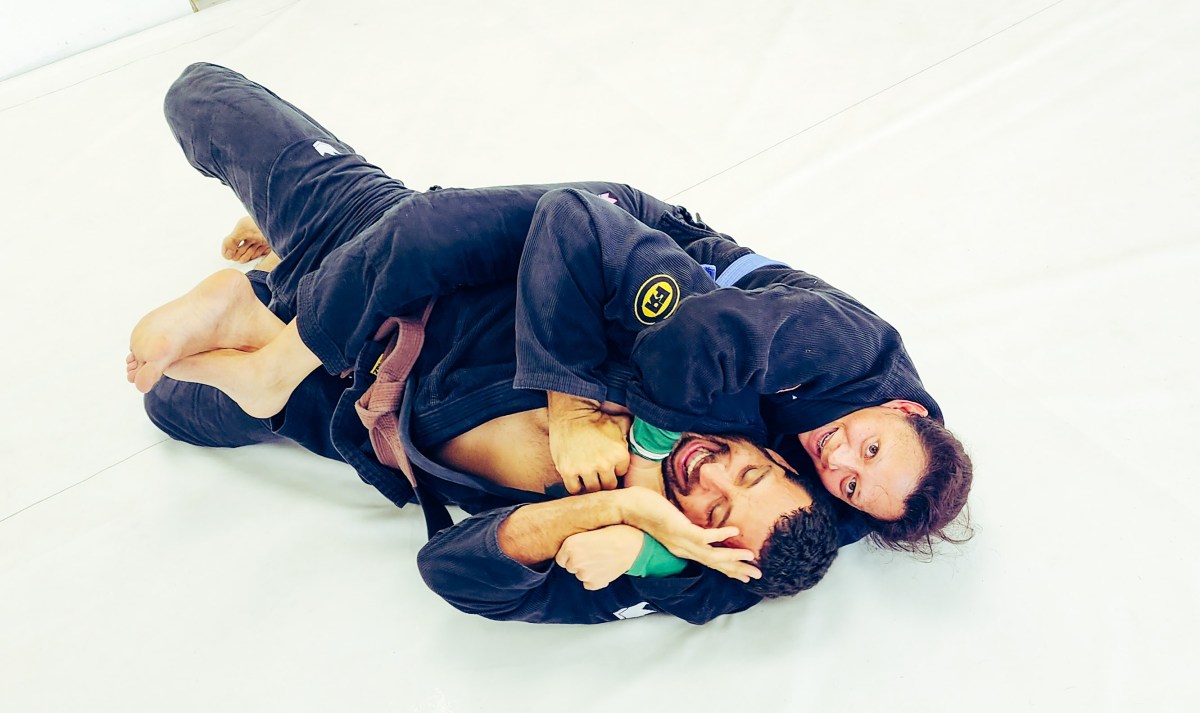
Jiu-Jitsu Naturally Improves Your Wellbeing

You’ve probably heard the saying “Jiu-Jitsu saved my life” and while that sometimes is an exaggeration, I have certainly met many practitioners where that may have literally true.

Some practitioners I know have quit using hard drugs once they fell in love with Jiu-Jitsu or cut back on drinking. Many others will tell you how Jiu-Jitsu has helped their anxiety, depression, confidence or helped get them through a tough time in their life like a divorce or other life stressors.

I myself say all the time that Jiu-Jitsu is my therapy. It’s the one place I come to relieve tension and not think about the millions of other things that weigh me down throughout the day.

For a long time, I wasn’t sure what it was about Jiu-Jitsu that made those who trained regularly fall in love with it. It thought perhaps it was just the release of dopamine or the relationships we build with our teammates, but the other day when I took a seminar on positive psychology, I realized that Jiu-Jitsu gives us much more than that.

Jiu Jitsu Increases Our Sense of Well-Being

The pursuit of happiness is something that most of us have in common and try to achieve in one way or another. Happiness however is often hard to define. In 2012, Dr. Martin Seligman (one of the fathers of positive psychology) described five components that people pursue because they are intrinsically motivating and contribute to wellbeing:

  • Positive emotion
  • Engagement
  • Relationships
  • Meaning
  • Accomplishments

He coined those five components “PERMA” and in my opinon that is exactly what Jiu-Jitsu gives us.

Positive Emotions

In Jiu-Jitsu we are always provided with the opportunity for positive emotions (hope, interest, joy, love, compassion, pride, amusement, and gratitude). Experiencing positive emotions helps negate many of the negative emotions we deal with and help make us more resilient against negative emotions.

I can’t think of a class I have taken or Jiu-Jitsu related even I have been too where at some point I am not smiling, laughing or feeling good vibes.

Engagement

Engagement as referred to by Dr. Seligman is “being one with the music” or being “in flow”. Flow refers to the loss of self-consciousness and being completely absorbed in an activity. You’re in the present and totally focused on the moment.

Anyone who trains can tell you that especially when rolling (live sparring) you often enter a state of flow without realizing it. It’s hard to think about that report that is due tomorrow when your teammate is trying to strangle you or when you finally see an opportunity to hit an escape you’ve been trying to hit all week.

There are many times I almost didn’t go to class because I wasn’t feeling well mentally or physically and all that goes away as soon as I start rolling and suddenly, at least in that moment, I feel really good.

Flow, or this concept of engagement, occurs when the perfect combination of challenge and skill/strength is found (Csikszentmihalyi & LeFevre, 1989).

Rickson Gracie even wrote a book entitled Breath: A Life in Flow which I have read and gifted to several people.

There are many other ways we can practice entering a state of flow by being present such as spending time in nature or engaging in things we really enjoy and can get lost in, but Jiu Jitsu does that naturally and beautifully without us even thinking about it.

Relationships

Positive relationships are very important in having a sense of well-being. Positive relationships include relationships where we feel loved, supported and valued. Jiu Jitsu again does this naturally. If you find the right academy for you, it’s only natural that those strangers will quickly become like family. As hard as they may push you in training, they are always happy to see you, encouraging, want to see you improve and care about you.

I was telling one of my Jiu-Jitsu teammates who I now consider a very close friend that the last time I genuinely made good male friends was my sophomore year in high school. Now at my academy I have training partners I consider brothers and sisters, people I can talk to about my problems and also help them with theirs or just be a sounding board. I have people I laugh with and enjoy spending time with on and sometimes off the mats.

For the most part, the entire Jiu Jitsu community tends to be like that, but of course you will develop special relationships at your academy and probably make more friends than you have made in a long time.

One’s social environment has been found to play a critical role in preventing cognitive decline, and strong social networks contribute to better physical health among older adults (Siedlecki et al., 2014).

Meaning

Having a sense of meaning or purpose in life is extremely important and it’s different for everyone, however training gives us a sense of meaning and purpose in many ways.

Some people train because they want to achieve a black belt someday. Others train for self-defense or physical fitness. Others train because they like to help teach the new student, lower belts or kids classes when they can. They enjoy giving back and helping others. Some train because they enjoy challenging themselves or competing. Others train because they enjoy being a part of something bigger than themselves.

For me it started as a journey of physical fitness and something I wanted to be able to teach my son and it still is, but now I want to achieve a black belt someday. I also enjoy teaching new students and being a part of a family of men and women from different worlds and cultures, but we all share the same passion.

People who report having purpose in life live longer, have greater life satisfaction and fewer health problems (Kashdan et al., 2009).

Accomplishments

Accomplishment in PERMA is also known as achievement, mastery, or competence and that’s another thing that training Jiu-Jitsu offers. It can be small accomplishments like making it through the warmups without resting (that was my goal for the first few weeks when I first started), to perfecting a sweep, guard or move. It can be but doesn’t nor should it always be about stripes and belt promotions because we all know that while those definitely feel great and are encouraging, they often are out of our control.

We achieve a sense of accomplishment by working toward and reaching goals, mastering something and/or having the self-motivation to finish something we set out to do. This contributes to wellbeing because individuals can look at their lives with a sense of pride (Seligman, 2012).

So now when I look back on how and why Jiu-Jitsu is so life changing for myself and others who fall in love with it, I see that it’s because Jiu-Jitsu offers all of us opportunities to work on our well-being and happiness by providing us PERMA regularly.

Research has shown positive associations between each of the PERMA components and physical health, vitality, life satisfaction and commitment. Proactively working on the components of PERMA have also been shown to decrease psychological distress and increase wellbeing.

Of course, there are other ways and other opportunities to work on and increase PERMA in your life and Jiu-Jitsu shouldn’t be your sole source for all of it, but it’s beautiful that it offers so much instinctively.