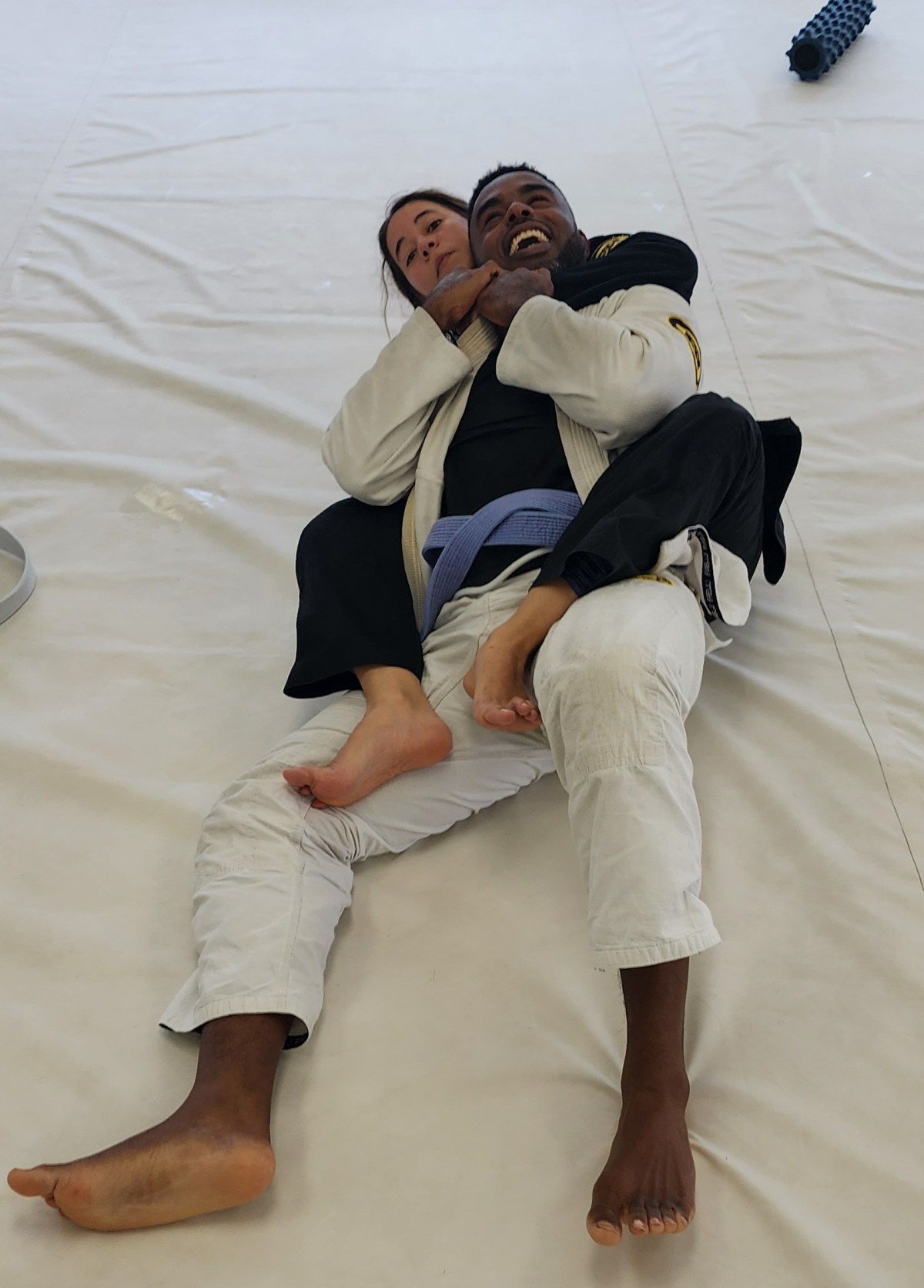
Mind, Body, and Gi: The Psychological Benefits of Jiu Jitsu Training


There’s an old saying in martial arts circles: “Black belts are merely white belts who refused to quit.” Beyond the physical prowess and tactical skill that Brazilian Jiu Jitsu (BJJ) practitioners cultivate, it’s the mental fortitude, the grit, that makes this adage ring true. But the psychological impact of Jiu Jitsu extends far beyond perseverance. Through its physical maneuvers, strategic gameplay, and immersive nature, BJJ provides practitioners with a wealth of mental health benefits.

The Power of Now: Mindfulness in Action

Mindfulness, the practice of focusing on the present moment, is a cornerstone of mental well-being. It is often recommended as a tool to alleviate a host of mental health concerns, including stress, anxiety, and depression. The practice of Jiu Jitsu, while physically intense and demanding, is fundamentally an exercise in mindfulness. Whether you’re drilling a technique or engaging in a sparring session, your mind must be entirely present on the mats. You’re focused on your breathing, your movements, and your opponent’s actions. This focused attention on the here and now leaves no room for ruminations about the past or anxieties about the future.

Self-Efficacy and Mastery

Self-efficacy, the belief in our ability to succeed in specific situations, is a crucial aspect of mental health. It influences our motivation, decision-making processes, and emotional responses. In BJJ, as you progress in your training, master new techniques, and see your skills improve, your sense of self-efficacy naturally increases. The consistent challenge followed by the eventual mastery of techniques in Jiu Jitsu helps develop a mindset of growth and adaptability. This mindset, once ingrained, often seeps into other areas of life, improving our overall sense of well-being and competence.

The Emotional Release

Jiu Jitsu is more than just an excellent physical workout; it’s also a potent form of emotional release. Like other physical activities, it stimulates the release of endorphins, neurotransmitters that act as natural mood elevators. But it’s more than just the ‘runner’s high’ at play here. The physical intensity, the act of grappling and exerting your strength, provides a tangible outlet for pent-up emotions. The mats can become a safe space where you can channel your frustration, anxiety, or stress in a constructive, cathartic manner.

Building Resilience

Resilience, our ability to bounce back from adversity, is an essential psychological strength. In the world of Jiu Jitsu, resilience is not just encouraged; it’s required. Every time you tap, every time a technique doesn’t work, you face a mini-adversity. And each time you dust off and try again, you are building your resilience. Over time, this capacity to ‘roll with the punches’ can extend beyond the mat, helping you deal more effectively with life’s challenges.

A Tribe of Your Own: The Power of Community

We are innately social beings, and having a sense of belonging is crucial for our mental health. A Jiu Jitsu dojo is not just a place to train; it’s a community. It’s a place where respect, discipline, and support are core tenets. This environment fosters positive relationships and provides a social network that can act as a buffer against stress and other psychological issues.

Empowerment and Confidence

Empowerment is a powerful antidote to feelings of helplessness that often accompany mental health problems. As you progress in your Jiu Jitsu journey, as you become more proficient and confident in your skills, you experience a tangible sense of empowerment. This confidence can extend to other areas of life, improving your overall self-esteem and sense of worth.

Caution: Jiu Jitsu is Not a Cure

While the mental health benefits of Jiu Jitsu are manifold, it’s important to remember that it is not a replacement for professional psychological help. It is a tool, an adjunct to traditional therapeutic methods. It can enhance the effects of therapy, medication, or other treatments, but it should not be seen as a stand-alone solution for mental health concerns.

So why Jiu Jitsu? Why not just a regular gym workout or meditation? Because Jiu Jitsu is a comprehensive package. It’s a physical workout, a mindfulness practice, a form of therapy, and a social gathering rolled into one. It’s a discipline that demands respect for the body and nurtures the mind in the process.

Jiu Jitsu is a journey, one where the destination is not a belt color but a better understanding of yourself. It’s a path that, if walked with an open mind, can provide mental fortitude, emotional balance, and psychological well-being.

To paraphrase the words of Master Carlos Gracie Jr., “Jiu Jitsu is for anyone who seeks a path of self-knowledge, self-improvement, and self-confidence.” In the intricate dance of grips, rolls, and submissions, there’s a healing rhythm, a road to mental peace. So step on the mat, put on your gi (or not if you prefer no gi 🙂 ), and start this beautiful journey. One roll at a time.

Tapping Into Inner Peace: Jiu Jitsu and Anxiety

Our modern world seems tailor-made for anxiety. The constant bombardment of information, the pressures of a career, financial worries, and now, the persistent undercurrent of a global pandemic, all collaborate to create an environment rife with stress. For those battling anxiety, it often feels like being caught in an invisible, yet persistent chokehold. But what if I told you that Brazilian Jiu Jitsu (BJJ) could serve as a tool to ease this often-overwhelming condition?

Anxiety and Its Discontents

Anxiety is more than just worry. It’s a prolonged, excessive fear or apprehension towards everyday situations. It’s the ongoing narrative in our minds that convinces us that disaster is always imminent. These intense, often uncontrollable worries can severely impact our day-to-day life and overall well-being.

BJJ: An Unlikely Antidote to Anxiety

At first glance, a martial art that involves intense physical contact may seem like an odd remedy for anxiety. But a deeper dive into the philosophy and practice of Jiu Jitsu reveals its potential as an anxiety-reducing practice.

Mindful Practice: The Heart of BJJ

Mindfulness is often proposed as a treatment for anxiety, and for a good reason. By training our minds to focus on the present moment, we can disentangle from the loop of worrying thoughts. Brazilian Jiu Jitsu, in its essence, is a form of active mindfulness. When you’re on the mats, you must be fully present, focusing on your movements, your opponent’s actions, and your breathing. There’s no room for worrying about that email you need to send or the mortgage payment coming up. The mat becomes an island of calm in the chaotic sea of our thoughts.

Building Self-Confidence through Mastery

As you progress in your Jiu Jitsu journey, you’ll acquire a growing arsenal of techniques and strategies. With each new belt, each successful sparring session, you gain a little more self-confidence. This burgeoning self-assuredness doesn’t stay confined to the mats; it seeps into other areas of your life. Being more self-confident can help alleviate anxiety, as you realize you’re more capable and resilient than your anxious thoughts would have you believe.

Exercise: The Natural Anxiety Reliever

Numerous studies have linked regular physical exercise with reduced anxiety levels. Exercise releases endorphins, neurotransmitters that act as natural mood lifters. Additionally, regular exercise can improve sleep quality, another vital factor in managing anxiety. With its mix of cardio, strength training, and flexibility work, Jiu Jitsu is a comprehensive fitness solution that hits all the sweet spots.

A Sense of Community: The Power of Belonging

Human beings are social creatures. We thrive on connections and suffer when they are lacking. For many people, anxiety creates a sense of isolation, a feeling of being out-of-step with the world. Joining a Jiu Jitsu gym means becoming part of a community that supports, challenges, and understands you. This sense of belonging can help combat feelings of isolation, providing a social support network that is often beneficial in managing anxiety.

Jiu Jitsu: A Journey, Not a Destination

It’s important to remember that while Jiu Jitsu offers many benefits for managing anxiety, it isn’t a cure-all. It’s a tool that, when combined with other interventions like therapy or medication, can form a comprehensive approach to anxiety management. Everybody’s journey with Jiu Jitsu will be different, as will their journey with anxiety.

The essence of Jiu Jitsu is about moving with, rather than against, your opponent. When it comes to anxiety, perhaps we can view it not as an enemy to be defeated but as an opponent to be understood. By understanding our anxiety, we can learn to move with it, redirect it, and sometimes, put it in its place.

Jiu Jitsu doesn’t promise a life free of anxiety. What it offers is far more valuable: the skills to manage anxiety, the strength to withstand it, and the community to support you through it.

So, whether you’re a seasoned practitioner or someone who’s never put on a Gi before, remember this: In the fight against anxiety, the Jiu Jitsu mat could be an ally worth having. After all, as Grandmaster Helio Gracie once said, “Jiu Jitsu is a mousetrap. The trap does not chase the mouse. But when the mouse grabs the cheese, the trap plays its role.” Let’s use Jiu Jitsu to set our traps and take control of our anxiety, one roll at a time.

The Art of Resilience: How Jiu Jitsu Helps Overcome Depression

When grappling with the grips of depression, it’s easy to feel lost, like you’re stuck in a position from which escape seems impossible. This feeling of hopelessness and helplessness is a tough opponent, one that requires resilience and strength of spirit to overcome. It’s here, on the canvas of our struggle, that Brazilian Jiu Jitsu (BJJ) can help us paint a picture of resilience and self-discovery.

The Jiu Jitsu – Depression Connection

I know many people who started Jiu Jitsu in the midst of battling with depression. Some were just getting out of a relationship and others were military veterans. The one thing they all had in common was that they were looking for something to be a part of and didn’t yet know the awesome benefits of training Jiu Jitsu when it comes to depression.

Jiu Jitsu, with its intricate network of techniques, patterns, and drills, provides a challenging but rewarding physical activity that stimulates both the body and mind. It requires the practitioner to be fully present, engrossed in the moment, much like meditation. For those battling depression, it offers an outlet, a space where they can focus their energies and momentarily step out of their gloom.

Building Resilience, One Roll at a Time

Depression often robs us of our self-esteem, but the Jiu Jitsu can help rebuild it, piece by piece. Every roll, every tap, every moment of breakthrough after a hard-earned struggle provides a sense of achievement. This achievement, regardless of how small, fuels the practitioner’s resilience – an essential trait when combating depression.

The Healing Power of Community

Jiu Jitsu doesn’t only promote physical engagement; it cultivates social interaction as well. The community that evolves in a Jiu Jitsu gym is one of support, respect, and camaraderie. This sense of belonging and acceptance can be a powerful antidote to the isolation and loneliness often felt in depression.

Physical Exercise and Mental Health

There’s an extensive body of research linking physical exercise to improved mental health. When we engage in physical activity, our body releases endorphins, known as ‘feel-good’ hormones, which can elevate our mood. Jiu Jitsu, with its demanding physical drills, can be a potent, natural antidepressant.

Learning to Embrace the Struggle

Jiu Jitsu teaches us to respect the struggle, to see it not as a blockade but as a catalyst for growth. It’s about finding comfort in the uncomfortable. And isn’t that what battling depression is all about? Embracing the struggle, finding ways to navigate through it, and coming out stronger on the other side. Jiu Jitsu will teach you that you’re tougher than you think you are and that it’s okay to not be perfect.

A Tool, Not a Cure

While the benefits are tangible, it’s important to remember that Jiu Jitsu isn’t a substitute for professional mental health treatment. It’s a tool, a supplementary practice that can fortify our mental health alongside therapy, medication, and other necessary interventions.

The journey of Jiu Jitsu, much like the journey through depression, is not a straight line. It’s a winding path, with hills and valleys. But by practicing Jiu Jitsu, we don’t merely learn how to grapple with our opponents; we learn how to grapple with our fears, our struggles, our inner demons. We learn that no position is impossible to escape from, and in the end, we emerge more resilient, more confident, and more in tune with ourselves.

In the words of Carlos Gracie Jr., “Jiu Jitsu is for the protection of the individual, the older man, the weak, the child, the lady, and the young woman – anyone who doesn’t have the physical attributes to defend themselves.” And perhaps, just perhaps, it can help protect us from the clutches of depression as well.