I Got My Brown Belt. Now What?

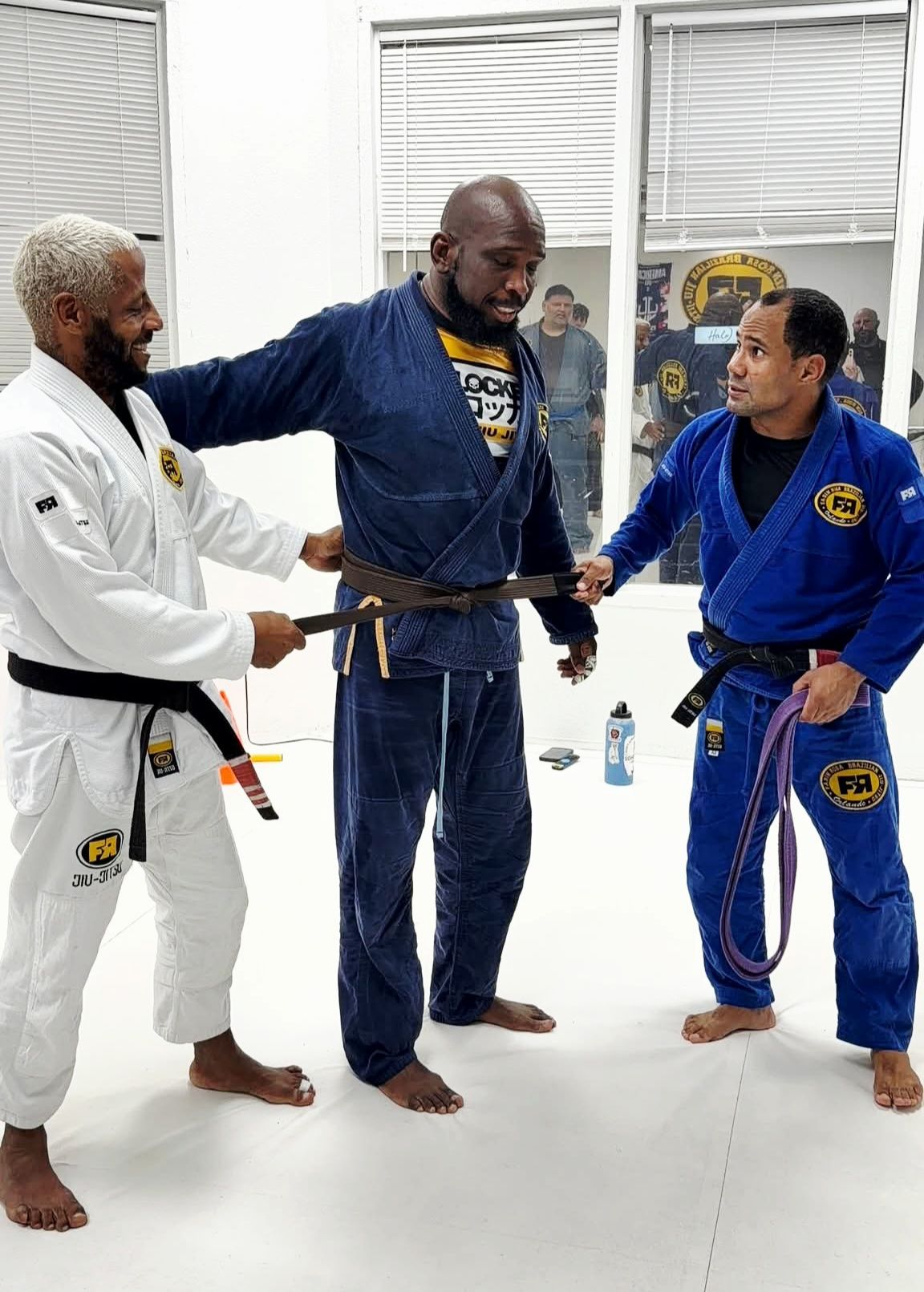
I got my brown belt last week.

I’m been a purple belt for so long that I thought I’d never write that sentence. Now I’m tempted to follow it with a list of everything I still need to work on. My takedowns could be better. A lot better. I can still get flattened in side control by somebody with a good crossface and underhook. And I know at least one person who will read this and immediately start looking for wristlocks the next time we roll.

But first, I want to give myself a minute to enjoy it. I earned my brown belt, and I’m proud of that.

A promotion means a lot in jiu-jitsu because there’s no shortcut to it. You can’t study for a weekend, pass a test, and suddenly become the person who wears the belt. You have to keep coming back. You get better at something, find out someone else can shut it down, and start figuring out what comes next. Sometimes you’re having fun. Sometimes you’re wondering why a move you hit last month seems to have disappeared from your body entirely.

I’ve been a purple belt since early 2023. In that time, I’ve had good rounds, frustrating rounds, and plenty where I couldn’t tell whether I was improving at all. I’ve competed. I’ve worked on building a game instead of collecting random techniques. I’ve tried to listen when my coaches told me what needed attention. Some lessons stuck quickly. Others required me to make the same mistake so many times that I started recognizing it while I was still making it.

That’s part of what this belt represents to me. It took time, and I kept showing up for that time. It also represents trust. My coach sees something in my jiu-jitsu that says I’m ready for the next rank. I don’t have to pretend I saw every part of my progress as clearly as he did. I can accept the promotion and take the responsibility seriously. As he said when he gave it to me in his thick Brazilian accent, “This belt is a lot of responsibility’.

The funny thing is, you spend years chasing a belt, and then you wake up the next day with the same guard, the same habits, and the same people who know exactly how to give you trouble. The brown belt doesn’t fix my side control escapes. It doesn’t make me faster or erase the holes in my game. If anything, it makes some of those holes easier for me to see.

I think that’s where the pressure can creep in. What if I have a bad round? What if a lower belt catches me? Am I supposed to have an answer for everything now?

I’ve thought about those questions, but I don’t want them running my training. I’ve rolled with higher belts long enough to know they’re still working through problems too. The ones I respect don’t act like being good means never getting caught. They pay attention, adjust, and come back to work on what happened. I’d rather be that kind of brown belt than spend every round protecting an image.

That doesn’t mean the belt means nothing. It means enough that I want to grow into it. I want my jiu-jitsu to become more deliberate. I want better answers when someone pressures me, and I want to be able to create opportunities instead of waiting for my opponent to make a mistake. I want to move more, sharpen my takedowns, and stop letting a tight crossface turn five minutes of misery.

I also want to be useful to the people coming up behind me. I remember what it felt like to be newer and have a higher belt take a minute to explain why something wasn’t working. I can’t teach everything, and I’m still learning plenty myself. But I can give somebody a good round, answer a question when I can, and make space for them to figure things out without acting like I was born knowing how to pass guard.

My teammates are a big part of how I got here. They’re the ones who made me work for positions, punished my lazy grips, let me try things that weren’t ready yet, and showed up again the next night. My coaches kept teaching me even when I was sure I understood something and then proved I didn’t. You can receive a belt on your own waist, but you don’t develop the skills it represents by yourself.

So, now what?

I’ll tie on my brown belt and train. I’ll be proud of it. I’ll have days when I feel sharp and days when somebody makes me question every decision I made after leaving work . I’ll keep trying to close the gaps in my game, and I’ll probably find new ones as soon as I do.

I wanted to earn this belt. I did. Now I get to find out what kind of brown belt I’m going to be.
The People We Find on the Mats

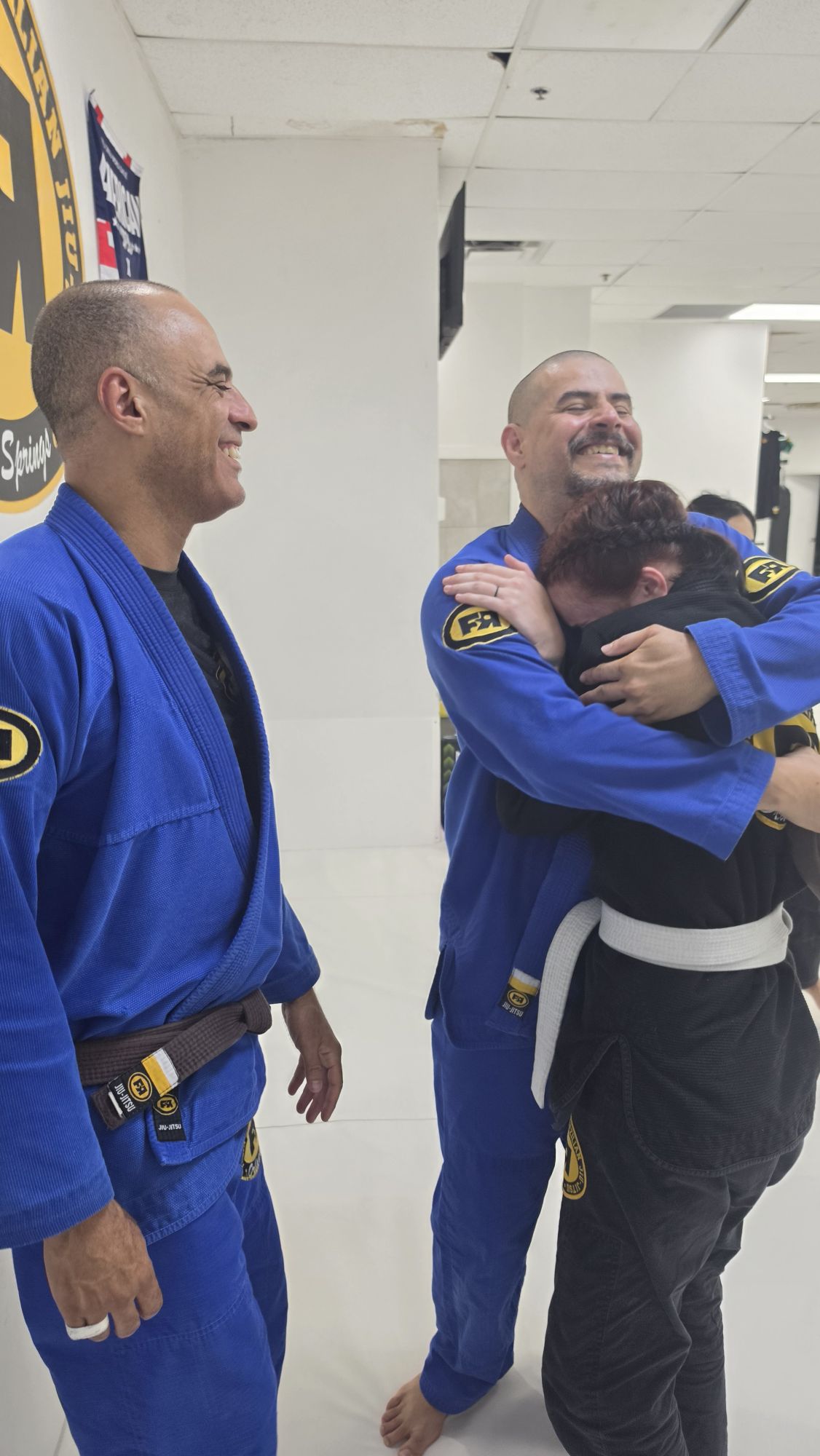
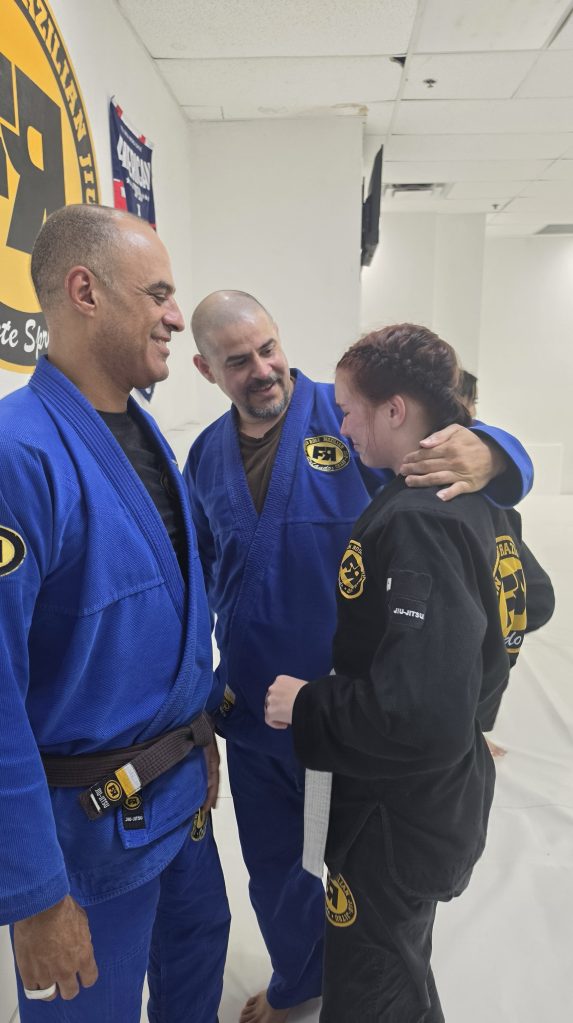
Last night, one of my younger teammates said goodbye to us. She’s moving to another city. She told me in the middle of one of our rolls, so I wasn’t blindsided. Still, hearing it while you’re trying to defend a pass is one thing. Watching her say goodbye to everyone is another.

There was laughter, because that’s what happens when our team gets together. Then tears. I was happy for her, but I also knew the gym would feel different without her.

To someone who doesn’t train, that might sound strange. People leave gyms all the time. They quit (blue belts, I see you), switch schools, move away, or get busy with life. I get it. But this one hit me harder than I expected.

When people talk about Jiu Jitsu, they usually talk about the physical parts like self-defense, submissions, competition, discipline and learning to stay calm when someone is trying to strangle you. That’s a big part of why I train. I want to get better, and I still get excited when something we drilled finally works during a live roll.

But technique alone doesn’t explain why I keep coming back after all these years. The people do.

It’s walking into the gym after a long day and seeing familiar faces. It’s getting paired with someone who knows when to push you and when you’re running on fumes. It’s laughing with the person who caught you in the same submission twice last week, then asking them to show you how they did it. Sometimes you stay after class to talk, even though you’re sweaty and should have gone home twenty minutes ago.

Jiu-jitsu also puts people together who might never have met anywhere else. A police officer and the guy who cuts meat at Publix might become each other’s favorite training partners. A teenager and a middle-aged man can give each other their toughest rounds and still be two of the people most glad to see each other at class. Rank, age, and whatever you do for work matter a lot less once you’re on the mat trying to get out of side control.

You don’t usually notice a friendship forming. You just keep showing up. Eventually you notice when somebody isn’t there. You ask how their tournament went, even if you couldn’t make it. When they get promoted, you remember the rounds when they struggled with the same things over and over. You know how much work, sweat and maybe even blood and tears went into that belt.

That kind of closeness doesn’t require anything mystical. We spend hours together trying to solve problems while we’re tired and uncomfortable. We see each other do well, get frustrated, lose positions we thought we’d figured out, and come back to try again. I’ve had people see me roll well, and I’ve had them watch me get wristlocked by the same guy every time. There’s no hiding the rough days.

Over time, you learn things about people that have nothing to do with their guard retention. You hear what’s going on at work, what they’re excited about, what they’re worried about. Someone you once knew only as the person who always went too hard becomes someone you look forward to talking to. The training gives you a reason to be in the same room. The relationship grows in all those moments around it.

That’s why last night was both sad and special. I’ve watched my teammate grow as a Jiu Jitsu practitioner and as a person. She’s making a move, and I’m proud of her. I hope her new city is good to her. I’ll also miss seeing her walk through the door, sharing a round, seeing her smile or hearing her laugh. Those are small things until you realize you won’t get to count on them every week.

We call our gym a family sometimes. I know that word can get thrown around too easily. Nobody has to be best friends with everybody, and showing up to class isn’t the same as knowing every part of someone’s life. But I’ve trained with some of these people long enough to care what happens to them after they leave the mat. When someone has a good day, I’m glad for them. When they’re going through something, I notice. Last night, a lot of us stayed together for a goodbye that mattered. That’s what I mean when I say I’ve found community here.

She’ll be in another city, and we’ll still be here training. We’ll complain about hard rounds, laugh at each other, and probably keep falling for the same setups we should know by now. I’ll look around some nights and notice she’s missing. I hope she finds good people to train with in her new city. I hope she visits and gives us all a hard time when she does.

I started jiu-jitsu because I wanted to learn how to grapple. I’m still working on that. I want to improve, compete, and see how far I can go. But somewhere along the way, the people who help me do that became a reason to show up, too. Especially on the days I don’t want to.

Last night made that pretty clear. We said goodbye to a teammate. We laughed, we cried, and we made sure she knew we’d miss her. Then, like we always do, we’ll come back and train.