
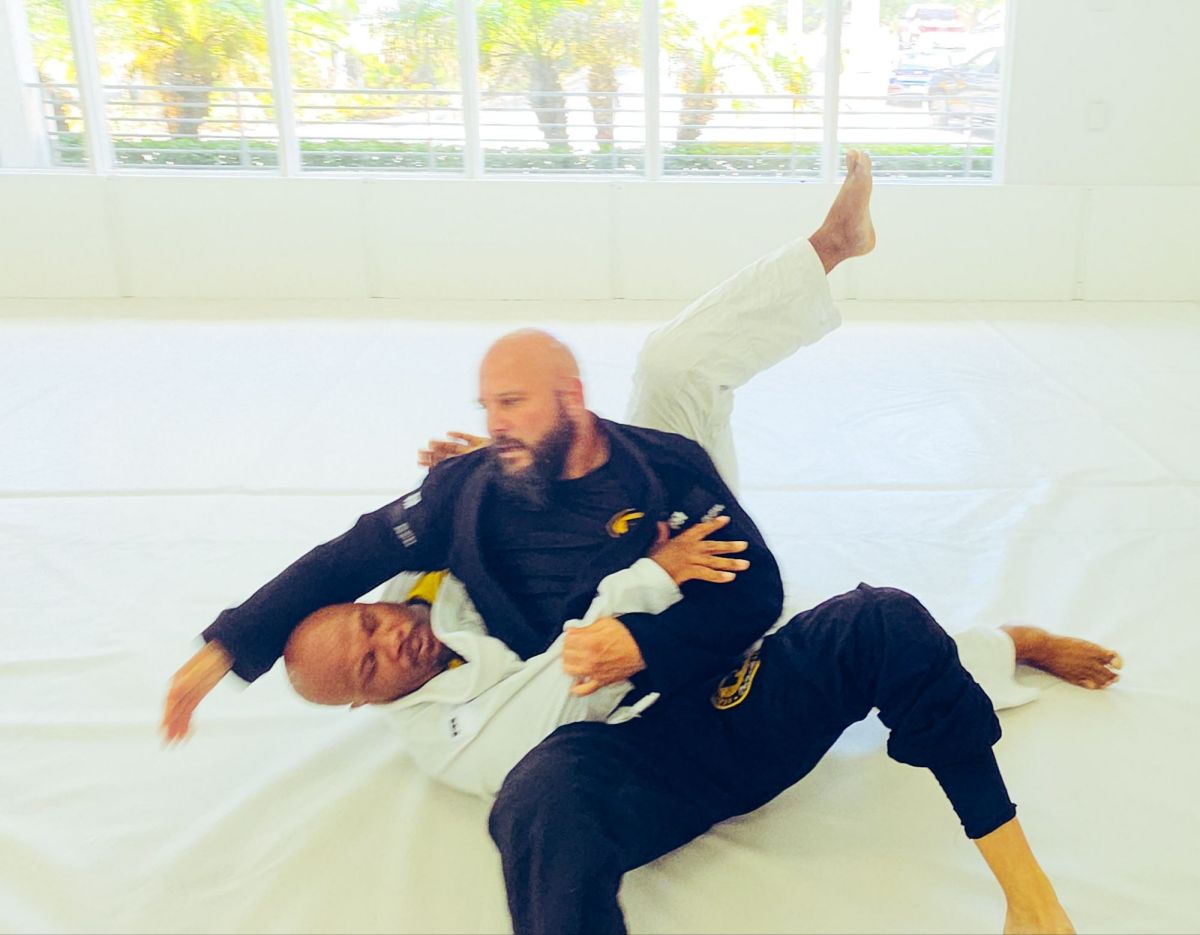
One of the strange things about getting better at Jiu Jitsu is realizing just how many techniques you know and how few of them you actually use.
After years of training, I’ve learned dozens of submissions, sweeps, escapes, takedowns, guard passes, and combinations. I’ve drilled techniques that I thought were amazing when I first saw them. I’ve watched instructionals. I’ve saved videos on Instagram and YouTube that I was absolutely convinced I would try at the next class.
And then the roll starts.
Suddenly, I can’t remember half of it.
Sometimes I’ll finish a round and realize I had several opportunities to attack but didn’t recognize them until afterward. Or I’ll get into a position where I know I have options, but instead of flowing into one of them, my brain seems to start flipping through an imaginary Jiu Jitsu encyclopedia.
What am I supposed to do from here again?
The problem isn’t necessarily that I need to learn more Jiu Jitsu.
Maybe I need to get better at using the Jiu Jitsu I already know.
Maybe what I really need is a game.
Collecting Techniques
When we’re new to Jiu Jitsu, collecting techniques feels like progress.
You learn an armbar.
Then a triangle.
Then a kimura.
Then somebody shows you a cool back take.
Next week your coach teaches another variation.
Before long, you’ve accumulated a huge collection of moves.
The problem is that having a collection of techniques isn’t the same thing as having a system.
It’s like owning a garage full of tools but having no idea which one to grab when something breaks.
A Jiu Jitsu game gives those tools organization.
Instead of asking, What techniques do I know from here?, you begin asking something much simpler:
Where am I trying to go?
That’s a very different question.
Your Game Gives You Direction
I’m starting to think a good Jiu Jitsu game should work almost like a map.
If I’m standing, where am I trying to take the match?
If I end up on bottom, which guard am I trying to establish?
From that guard, what is my highest percentage sweep or submission?
If my opponent shuts that down, where does their defense take me?
If I get on top, what position am I trying to reach?
And once I get there, how do I finish?
That’s a game.
It doesn’t mean you only know five techniques. It means you have a handful of techniques that you understand deeply enough to connect together.
Your opponent closes one door and, ideally, their reaction opens another.
That’s when Jiu Jitsu starts becoming less about remembering moves and more about recognizing patterns.
The Submission Problem
I’ve noticed this particularly with submissions.
There are times when I’m rolling and feel like I’ve forgotten every submission I’ve ever learned over my seven years of training.
I’m controlling. I’m moving. I’m surviving. I may even be getting into dominant positions.
But where are my attacks?
Then afterward I can think of five things I could have attempted.
I don’t think the answer is learning five more submissions.
If anything, that’s probably making the problem worse.
The better question is: Which submissions do I want to become known for?
Maybe I don’t need twenty different attacks from side control.
Maybe I need two that work together extremely well.
If my opponent defends the first, their defense creates the second.
And if they shut down both, maybe that reaction gives me the opportunity to advance position.
Now I’m no longer searching my memory for a move.
I’m following a path I’ve traveled hundreds of times.
Your A-Game Isn’t Cheating
There’s sometimes an assumption that being a good grappler means being good everywhere.
Eventually, sure, we should try to become well-rounded.
But watch experienced grapplers and you’ll notice something: they have preferences.
They have positions they want.
They have guards they trust.
They have passes they repeatedly find.
They have submissions everyone in the academy knows they’re looking for and somehow they still catch people with them.
That’s not a lack of creativity.
That’s expertise.
There’s something powerful about having an opponent know exactly what you want and still being able to take them there.
Your A-game becomes the foundation everything else grows around.
Depth Before Width
Maybe part of getting better at Jiu Jitsu is eventually changing the question.
Instead of:
What else can I learn?
We start asking:
How much better can I become at what I already know?
Can I hit that sweep against someone who knows it’s coming?
Can I get to my favorite position against a better grappler?
Can I recognize the transition before I have to consciously think about it?
Can I connect my best takedown to my best pass, my best position, and eventually my best submission?
That’s depth.
And depth takes time because you’re no longer simply learning what a technique looks like.
You’re learning timing.
Reactions.
Counters.
Counters to counters.
You’re learning when the technique isn’t there.
That’s the difference between knowing a move and owning it.
Build Something That’s Yours
I still want to learn new techniques. That’s part of what keeps Jiu Jitsu interesting.
But I’m becoming less interested in collecting moves just for the sake of collecting them.
Some moves just aren’t for me. They may not feel right for various reasons.
I want connections.
I want to know where I’m going.
I want certain positions to feel like home.
And I want to develop a game that reflects who I am as a grappler… my body, my age, my strengths, my limitations, and the way I naturally move.
Maybe that’s one of the transitions that happens as you progress in Jiu Jitsu.
At first, you’re trying to learn everything.
Eventually, you start figuring out what’s yours.
So the next time you feel like you don’t know enough techniques, maybe the answer isn’t another instructional or another move saved to your phone.
Take inventory of what you already have.
Pick your best positions.
Pick your highest-percentage attacks.
Figure out how they connect.
Then drill those paths until you don’t have to search for them anymore.
Because at some point, you probably don’t need more Jiu Jitsu.
You need to turn the Jiu Jitsu you already know into your Jiu Jitsu.


