
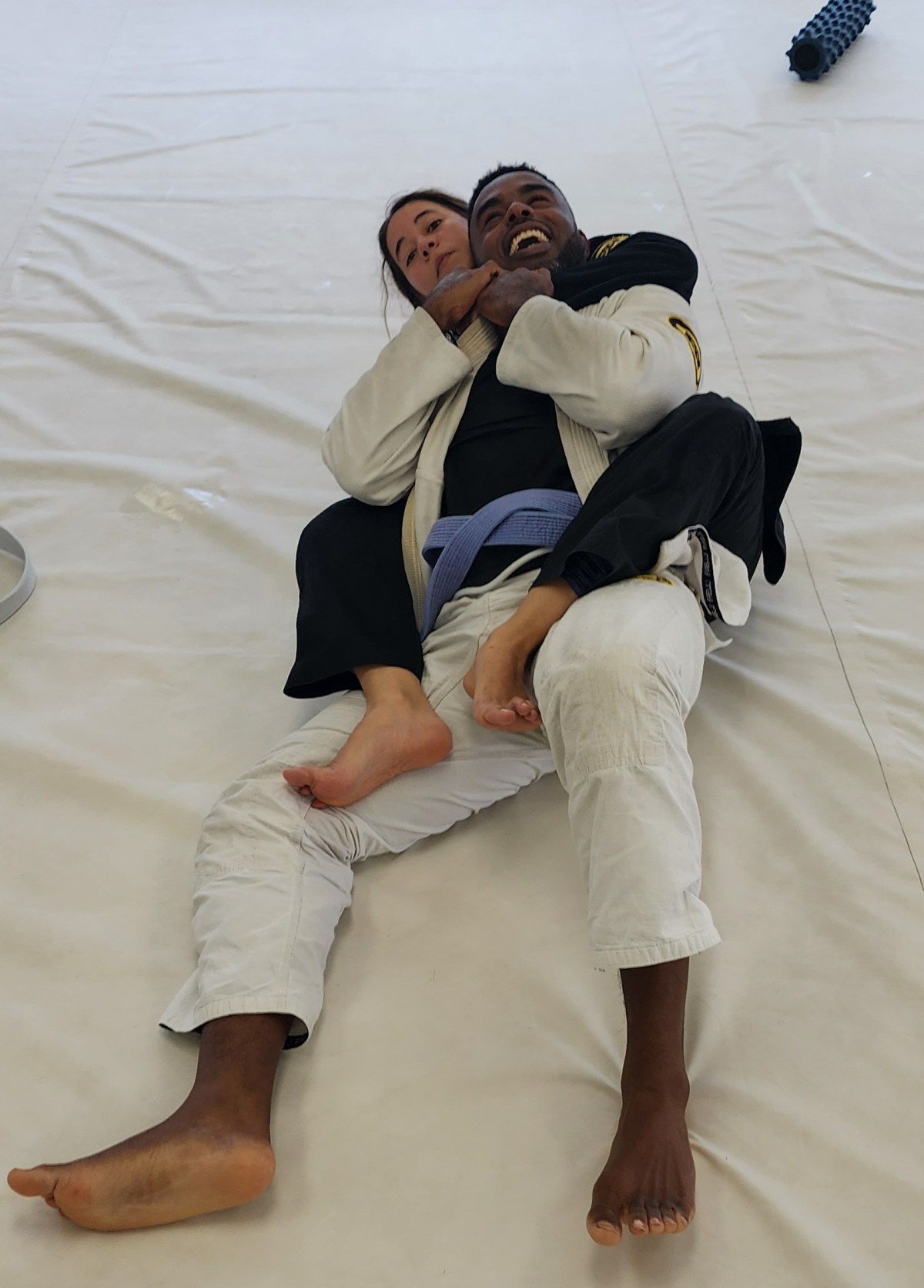
There’s an old saying in martial arts circles: “Black belts are merely white belts who refused to quit.” Beyond the physical prowess and tactical skill that Brazilian Jiu Jitsu (BJJ) practitioners cultivate, it’s the mental fortitude, the grit, that makes this adage ring true. But the psychological impact of Jiu Jitsu extends far beyond perseverance. Through its physical maneuvers, strategic gameplay, and immersive nature, BJJ provides practitioners with a wealth of mental health benefits.
The Power of Now: Mindfulness in Action
Mindfulness, the practice of focusing on the present moment, is a cornerstone of mental well-being. It is often recommended as a tool to alleviate a host of mental health concerns, including stress, anxiety, and depression. The practice of Jiu Jitsu, while physically intense and demanding, is fundamentally an exercise in mindfulness. Whether you’re drilling a technique or engaging in a sparring session, your mind must be entirely present on the mats. You’re focused on your breathing, your movements, and your opponent’s actions. This focused attention on the here and now leaves no room for ruminations about the past or anxieties about the future.
Self-Efficacy and Mastery
Self-efficacy, the belief in our ability to succeed in specific situations, is a crucial aspect of mental health. It influences our motivation, decision-making processes, and emotional responses. In BJJ, as you progress in your training, master new techniques, and see your skills improve, your sense of self-efficacy naturally increases. The consistent challenge followed by the eventual mastery of techniques in Jiu Jitsu helps develop a mindset of growth and adaptability. This mindset, once ingrained, often seeps into other areas of life, improving our overall sense of well-being and competence.
The Emotional Release
Jiu Jitsu is more than just an excellent physical workout; it’s also a potent form of emotional release. Like other physical activities, it stimulates the release of endorphins, neurotransmitters that act as natural mood elevators. But it’s more than just the ‘runner’s high’ at play here. The physical intensity, the act of grappling and exerting your strength, provides a tangible outlet for pent-up emotions. The mats can become a safe space where you can channel your frustration, anxiety, or stress in a constructive, cathartic manner.
Building Resilience
Resilience, our ability to bounce back from adversity, is an essential psychological strength. In the world of Jiu Jitsu, resilience is not just encouraged; it’s required. Every time you tap, every time a technique doesn’t work, you face a mini-adversity. And each time you dust off and try again, you are building your resilience. Over time, this capacity to ‘roll with the punches’ can extend beyond the mat, helping you deal more effectively with life’s challenges.
A Tribe of Your Own: The Power of Community
We are innately social beings, and having a sense of belonging is crucial for our mental health. A Jiu Jitsu dojo is not just a place to train; it’s a community. It’s a place where respect, discipline, and support are core tenets. This environment fosters positive relationships and provides a social network that can act as a buffer against stress and other psychological issues.
Empowerment and Confidence
Empowerment is a powerful antidote to feelings of helplessness that often accompany mental health problems. As you progress in your Jiu Jitsu journey, as you become more proficient and confident in your skills, you experience a tangible sense of empowerment. This confidence can extend to other areas of life, improving your overall self-esteem and sense of worth.
Caution: Jiu Jitsu is Not a Cure
While the mental health benefits of Jiu Jitsu are manifold, it’s important to remember that it is not a replacement for professional psychological help. It is a tool, an adjunct to traditional therapeutic methods. It can enhance the effects of therapy, medication, or other treatments, but it should not be seen as a stand-alone solution for mental health concerns.
So why Jiu Jitsu? Why not just a regular gym workout or meditation? Because Jiu Jitsu is a comprehensive package. It’s a physical workout, a mindfulness practice, a form of therapy, and a social gathering rolled into one. It’s a discipline that demands respect for the body and nurtures the mind in the process.
Jiu Jitsu is a journey, one where the destination is not a belt color but a better understanding of yourself. It’s a path that, if walked with an open mind, can provide mental fortitude, emotional balance, and psychological well-being.
To paraphrase the words of Master Carlos Gracie Jr., “Jiu Jitsu is for anyone who seeks a path of self-knowledge, self-improvement, and self-confidence.” In the intricate dance of grips, rolls, and submissions, there’s a healing rhythm, a road to mental peace. So step on the mat, put on your gi (or not if you prefer no gi 🙂 ), and start this beautiful journey. One roll at a time.

 Grappling with Jiu-Jitsu